
Wheat Ridge residents propose student-led youth council to boost civic engagement
Get AI-powered insights, summaries, and transcripts
Subscribe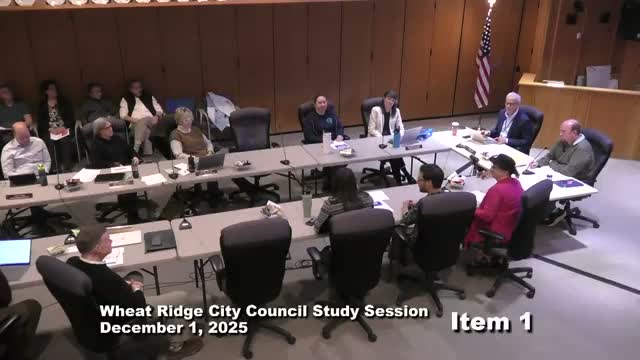
Summary
A Wheat Ridge 102 resident team recommended creating a youth council of high‑school members with middle‑school constituents, piloting at Wheat Ridge High and Everett Middle, to translate student ideas into local projects and build civic skills; councilors responded positively and asked follow-up on selection, credits and staff support.
A student team from Wheat Ridge 102 recommended that the city establish a student‑led youth council to increase youth representation and turn student ideas into tangible city projects.
The team — who identified themselves as Brianna, Alex and Renee during a Dec. 1 study session — said the council would center high‑school members while formally engaging middle‑school students as constituents who feed issues and priorities into the council's work. Their blueprint proposes a school‑year term, subcommittees for outreach and events, small stepping‑stone projects and a spring capstone presented to city staff and council. The presenters recommended piloting the program at Wheat Ridge High School and Everett Middle School and allocating a modest budget for recognition and refreshments to support participation.
In presenting research from regional programs, the students said they surveyed middle and high school students and learned young residents want opportunities to influence city decisions. They recommended that the council reserve some seats for students with diverse backgrounds and suggested a mix of teacher recommendations and at‑large applications for selection so the council does not rely on a single pipeline.
Councilors praised the concept and asked detailed questions about logistics. Councilor Quinn asked about survey sampling and whether the program would replace existing student councils; presenters and mentors said it would not. On the possibility of school credit to incentivize participation, staff said that was an idea floated by high‑school principals and a regional example, but that credit would likely be a later iteration rather than a first‑year guarantee.
Deputy City Manager Mary Anne Schilling and program mentors said the city and partners (including Local Works) would support implementation and recommended building mentor roles while keeping the council student‑led. "We want students to lead the process," a project mentor told council, stressing mentor guidance rather than adult direction.
Council members suggested rotating council liaisons, building leadership pipelines from earlier cohorts, and ensuring the selection process includes underrepresented youth. Next steps discussed included finalizing recruitment plans, a pilot launch timeline and coordination with school schedules so meetings do not conflict with extracurriculars.
The council did not take formal action at the study session; members indicated strong support and directed staff to continue developing implementation details for future consideration.