Colorado water agencies debate Shoshone acquisition as legal authority and historical‑use figures collide
Loading...
Summary
At a two‑day Colorado Water Conservation Board hearing, front‑range utilities backed acquiring the Shoshone water rights to protect the Colorado River’s flow regime but urged safeguards against a donor’s proposed contract terms that would limit CWCB discretion; technical witnesses disputed the donor’s historical‑use estimate. (CWCB hearing)
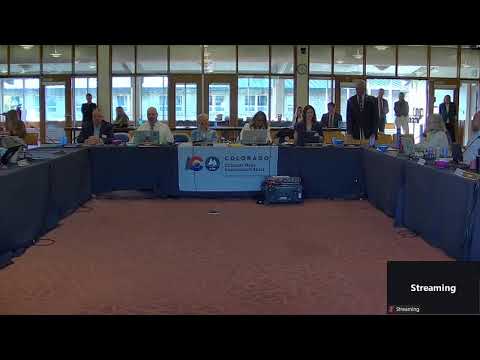
The Colorado Water Conservation Board on Wednesday heard two days of expert testimony and cross‑examination over a proposed acquisition of the senior Shoshone water rights that would convert the hydropower call to an instream‑flow (ISF) right intended to protect the Colorado River through Glenwood Canyon.
Northern Colorado Water Conservancy District and major Front Range providers said they support CWCB acquiring the historic Shoshone rights “if it’s done right,” but pressed the board to refuse contract terms that would hand a donor veto power over when and how the rights are exercised. Davis Wirt, general counsel to Northern Water, told directors that the proposed ISF agreement “would be dictating instream flow use of the Shoshone water rights” and urged the CWCB to retain full discretion in operating any ISF it holds.
Denver Water, Aurora Water and Colorado Springs Utilities also urged caution. Denver’s counsel, Dan Arnold, said Denver “supports the acquisition” in principle but warned that the donor’s preliminary historical‑use analysis and proposed contract language risk expanding the right and constraining CWCB discretion. Jeff Bandy, Denver Water’s modeling manager, presented simulations that compared the River District’s proposed 1,408 cubic feet per second (CFS) operating assumption with the status‑quo Shoshone outage protocol (SHOP), concluding the higher assumed call would increase substitution bills and deepen reservoir drawdowns in some modeled years.
Front‑range technical testimony challenged the donor’s accounting for historical diversions. Heather Thompson, a senior water resources engineer testifying for front‑range parties, said the donor consultant’s (BBA) chosen study period and use of DOTSERO gauge flow as a surrogate for diversions inflated the long‑term volumetric estimate. Thompson reported a revised estimate of about 538,204 acre‑feet per year versus BBA’s ~844,644 acre‑feet/year figure and modeled how a larger volumetric limit could increase curtailment of junior trans‑mountain diversions and draw down replacement reservoirs.
The River District and its technical team defended their approach and presented model runs using CWCB’s Upper Colorado River model. River District modelers said permanency of a Shoshone ISF would better protect the 15‑mile reach and reduce the risk that federal endangered‑species consultations would impose wider constraints on Colorado water users.
Legal and policy dispute centered on whether CWCB can accept ISF donation terms that effectively limit its discretion or require the board to seek written donor consent before reducing a call. CWCB staff and the Attorney General’s office advised that while the board may enter contracts imposing limited operational provisions, the agency retains exclusive statutory authority to hold and use water rights for instream flows. Several presenters urged the board to require explicit ISF agreement language making clear staff does not adopt any preliminary historical‑use analysis as the board’s position.
Board action and next steps The board voted to close the evidentiary record and enter deliberations, pausing the matter until a November session after an agreed two‑month extension. Directors directed staff to work with parties to draft revised ISF agreement language that: acknowledges existing agreements (without adopting specific parties’ methodologies), creates a collaborative co‑management framework for limited, defined circumstances when a reduction in the call might be considered, and clarifies who pays for any new measurement or infrastructure required by the acquisition (the River District agreed in principle to fund identified measurement infrastructure). Staff also was asked to be an objective participant in negotiations over historical‑use methodology but to avoid endorsing any party’s preliminary study in the water‑court phase unless the board later takes a position.
What remains to be resolved Major unresolved issues include the water‑court quantification of historical consumptive use and the final form of any co‑management language that would govern extraordinary call reductions. Parties said they will continue technical and mediated discussions; the board said it will consider any stipulations or settlement proposals when it reconvenes. The board emphasized that any reopened record must be limited to agreed stipulations or settled terms and warned it will not accept new, unilateral evidence without giving all parties notice and opportunity to respond.
The board paused deliberations and directed staff to pursue the drafting tasks and continued negotiations; if the parties reach settlement language, the record can be reopened limitedly in November so the board may act on any agreed ISF terms.