Get Full Government Meeting Transcripts, Videos, & Alerts Forever!
Get email alerts on the Fee Schedule Fire Lines topic
No spam. Unsubscribe anytime.
Council reviews corrections to consolidated fee schedule; staff lays out phased options for omitted fire‑line fees
Summary
Public Utilities briefed the council that a missing fire‑line fee was omitted from the city’s consolidated fee schedule; staff presented options to correct the schedule (effective retroactive to July 1, phased implementation over two or three years, or immediate adoption with customer credits) and corrected revenue shortfall estimates; council asked for more data and continued the discussion to Dec. 2.
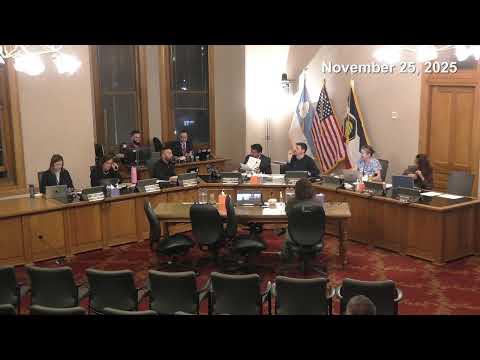
Public Utilities returned to the council to resolve an omission in the city’s Consolidated Fee Schedule involving fire‑line fees. Staff told the council state code requires the full details of rates be transparently set by the council, making the omission more consequential because fees charged since July 1 may need refunding or crediting.
Staff outlined options: (1) correct the CFS and make the full fee effective immediately (retrospectively effective July 1) and consider customer credits for fees already collected; (2) phase the increase over two years (staff presented a phasing model with suggested percentages); or (3) phase the increase over three years with smaller initial steps. Financial analyst Jacob Jorgensen summarized implementation models and explained the choice affects near‑term department revenue and longer‑term rate projections. He also corrected an earlier shortfall estimate, saying the projected shortfall was $1.7 million (the earlier number had omitted detector checks), with a six‑month partial implementation shortfall roughly $875,000.
“Because this rate had been left off previous studies for decades, these are costs we are bearing on the system to provide the service,” staff said, explaining the city had historically spread those costs across ratepayers and the rate study reallocated them to the customers receiving the service.
Council discussion focused on equity and practical impacts. Several councilmembers raised examples in which a single meter and consolidated billing for multi‑unit buildings or HOAs meant that working‑class tenants bore the impact of an increase that analytics show falls primarily on larger commercial customers. Members asked whether spreading the cost system‑wide would be more equitable; staff cautioned that rate‑setting principles require allocating cost of service proportionally to the burden of service and warned spreading the cost could shift the subsidy onto other customers.
Multiple councilmembers also emphasized communications: many affected customers first learned of changes only after receiving a bill, and the council asked staff to develop direct outreach targeted at impacted property managers and HOAs. Given additional questions and requests for deeper data, the council scheduled follow‑up discussion for Dec. 2 to allow members time to review the phased‑implementation scenarios and impacts.
Staff said they are prepared to draft an ordinance and work with the administration and city attorney depending on council guidance.