Get Full Government Meeting Transcripts, Videos, & Alerts Forever!
Get email alerts on the Transportation Truck Routes topic
No spam. Unsubscribe anytime.
San Bernardino council schedules special session on citywide truck routes after heated public hearing
Summary
After a public hearing with dozens of residents, the San Bernardino City Council set a special meeting for Dec. 10 to revise proposed citywide truck routes and introduced an ordinance citing state AB 98 requirements for truck routing and warehouse standards. Residents raised health, safety and road‑damage concerns; staff says maps will be revised.
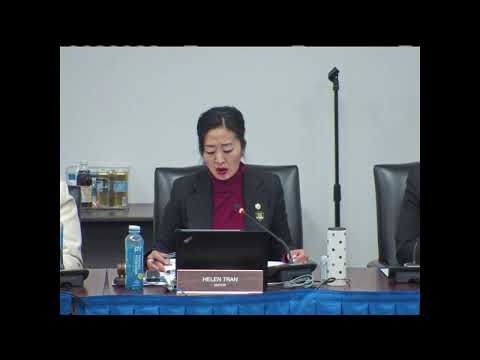
San Bernardino — The City Council moved Tuesday to continue work on adopting citywide truck routes required by state law, scheduling a special meeting on Dec. 10 to refine maps after a heated public hearing in which residents said proposed routes would bring heavy semitrailer traffic through neighborhoods.
Interim city planner Saeed Naseh told the council the effort responds to AB 98, the 2024 state law that requires cities to adopt truck routes and certain warehouse design standards by Jan. 1, 2026. Staff presented two options: Option A (the planning commission map) and Option B (which removes a Cajon Road linkage and includes other deletions). Naseh said the goal of the route study “was really to get trucks as soon as possible to the freeway so they don't wander around our streets.”
Why it matters: Residents said the chosen routes would concentrate diesel fumes, noise and pavement damage in neighborhoods. Dolores Armstead, one of several public commenters, told the council, “It's already dangerous, it's already unhealthy,” and called for resident involvement and a moratorium on new warehouses until impacts are addressed. Truck drivers and logistics workers countered that warehouses and nearby distribution centers are needed for delivery speed and argued that the city’s land‑use history created the current pattern.
Council action and process: Councilmember Sanchez moved to adopt Option B with mitigations for the Muscoy area and to have staff incorporate council suggestions. Because the maps and public comments require additional revision, the council voted to hold a special meeting on Dec. 10 at 3:30 p.m. to act on the General Plan amendment; the voice vote recorded members saying “yes” and the motion passed. Council then unanimously waived further reading and introduced Ordinance MC1657, which updates municipal code to adopt citywide truck routes and references the plan map.
What staff said: Naseh said outreach included meetings with county officials, the California Trucking Association, the People’s Collective (an environmental‑justice group), and the police department’s commercial enforcement unit, which will check bills of lading when trucks travel on non‑designated roads. Staff also noted two corrections to the staff report: revised ordinance language for Exhibit A and a correction scheduling the second reading for Dec. 17, 2025.
Next steps: Staff told the council the map is not final and that it will be revised to reflect council and community input ahead of the Dec. 10 special session. The council directed staff to return with the revised maps and any mitigations. The AB 98 compliance deadline of Jan. 1, 2026 frames the schedule for second readings and adoption.
Community reaction: Public commenters emphasized safety near schools and downtown corridors, urged clearer identification of existing warehouses on maps and demanded more enforcement against idling and illegal truck parking. Councilmembers agreed the map should be refined and that staff should identify actual warehouse locations to help voters and residents evaluate impacts. Ending: The council left the public hearing open for deliberation and set the special meeting to try to produce a version acceptable to council and the community.