Get email alerts on the Addiction Services topic
No spam. Unsubscribe anytime.
Empowerhouse director describes program results, asks to return for funding discussion
Summary
Melissa Landis, executive director of Empowerhouse, told Coffey County commissioners the program served dozens of people in recovery, highlighted job-readiness and court-debt support, and said she will return in May to discuss possible use of special alcohol funds.
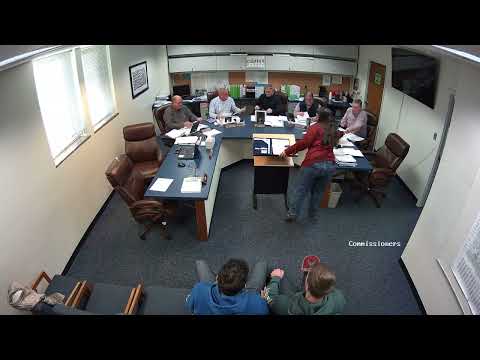
Melissa Landis, executive director of Empowerhouse, told the Coffey County Commission on Monday that the organization provides housing and life-skills services for people in early recovery from addiction and plans to return in May to discuss potential special-alcohol fund support.
"Imagine waking up one morning and your entire life is in shambles," Landis said, summarizing why Empowerhouse focuses on immediate stabilization. Landis walked commissioners through operational details and statistics she brought to the meeting, including average client age (34), and that 72% of participants have minor children. She said the program impacts roughly 175 children per year by stabilizing parents and helping them regain custody and employment.
Landis said Empowerhouse runs a women’s home (capacity nine) opened in February 2022 and a men’s house opened in November 2023, and that at peak the men’s waitlist reached 17. She described a staged residential curriculum: week 1 for obtaining identification, week 2 for resumes, weeks 3–4 for job search, and continued budgeting and court-debt work. Landis said the program served 92 people in the most recent year: 32 women and 38 men in housing and 22 in life-skill clinics; to date Empowerhouse has provided services to about 157 people.
Landis also described intake requirements and outcomes: residents must show 14 days clean to enter, most stay an average of four to six months, and retention past 50 days correlates with higher success rates (about two-thirds). She said staff follow up after participants leave, offering phone support and referral to treatment providers and community resources.
Commissioners asked how Landis verifies sobriety, and she said she uses relationships with treatment providers and direct testing when needed. Landis also said she will return in May to present options for using special alcohol funds and answer departmental budget questions.
The commission thanked Landis for the report and invited her back to discuss funding in the spring.
AI generated
The text on this page is AI generated. Summaries, highlights, and analysis are all produced from the original source material.
AI can make mistakes, so if you spot one, and we will fix it for everyone.
Note: the source content is unaltered by us. Any content source we link to, be it a video, an audio recording, a transcript, or a document, is presented exactly as its publisher released it. That publisher is usually a government body, sometimes an individual official or another organisation.