Get Full Government Meeting Transcripts, Videos, & Alerts Forever!
Get email alerts on the Local Tax Policy topic
No spam. Unsubscribe anytime.
Washington council sends two half-cent sales tax proposals to April 2026 ballot
Summary
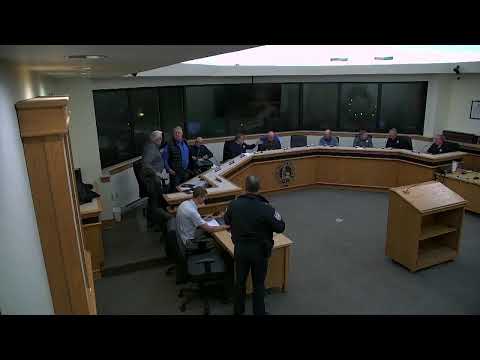
The Washington City Council voted Dec. 1 to place a half‑cent capital improvement sales tax and a half‑cent transportation sales tax before voters in April 2026, citing project lists, federal funding timelines and an estimated $25 million revenue projection over eight years for the capital tax.
The Washington, Missouri City Council voted Dec. 1 to place two half‑cent sales tax proposals before voters in April 2026: a capital improvement sales tax and a transportation sales tax.
City staff told the council the capital projects list and committee review informed the proposed ballot language for the capital improvement tax, and that the measure is estimated to generate approximately $25,000,000 over an eight‑year window assuming a 2% annual growth projection. Staff stressed that state statutory language referencing retirement of bonded indebtedness must remain in the ballot wording even though most previously issued project bonds will be paid off by 2030.
On the transportation proposal, staff explained that federal funding programs commonly used by the city — including CMAQ (Congestion Mitigation and Air Quality) for intersection projects and STP (Surface Transportation Program) for road rehabilitation — are programmed on a four‑to‑five‑year cycle. Renewing the transportation half‑cent before the current tax expires in 2030 would preserve the city’s ability to apply for and align local matching funds with multi‑year federal project schedules. If approved in April 2026, staff said the transportation tax would continue funding through 2030 and then begin a new 20‑year funding term for projects identified in the city’s list.
Darren (staff) said he reviewed the draft language with Mark (staff/legal), who advised the committee that certain statutory phrases are required on the ballot. The council conducted a roll call on second reading for both ordinances and voted to send each measure to the ballot.
Next steps: The measures will appear on the April 2026 municipal ballot if the city proceeds with final ballot preparation and publication. Staff said the council will receive an updated presentation on projects in January or February and that additional public outreach and workshops have already taken place.