Lifetime Citizen Portal Access — AI Briefings, Alerts & Unlimited Follows
Perris planning commission backs Perris Gateway Commercial Center, with conditions to curb drive‑throughs and require further design review
Loading...
Summary
The Perris Planning Commission voted 5-0 to recommend that City Council certify the Final EIR and approve entitlements for the Perris Gateway Commercial Center, approving self‑storage and a Maverick convenience store while limiting drive‑through pads, removing one fuel‑station CUP, and requiring future design review for a possible hotel or medical office.
PERRIS — The Perris Planning Commission on [Nov. 19, 2025] voted 5-0 to recommend that City Council certify the Final Environmental Impact Report (EIR) and approve entitlements for the Perris Gateway Commercial Center, a proposed commercial development along Ramona Expressway near the I-215.
The commission’s recommendation, made after a lengthy staff presentation and public comment period, approves a specific plan amendment, multiple tentative parcel maps, conditional use permits (CUPs) and development plan reviews (DPRs) to facilitate a roughly 20.28‑acre commercial complex that includes a self‑storage facility, a Maverick convenience store with fuel and off‑sale beer and wine (Type 20 license), retail/office buildings and multiple drive‑through pads. Staff told the commission the Final EIR concluded most impacts could be mitigated but identified air‑quality and cumulative greenhouse‑gas impacts as "significant and unavoidable," requiring adoption of a statement of overriding considerations for project approval.
Project planner Matthew Evans said the applicant revised the proposal after ad hoc committee meetings to reduce driveways, reserve space for a potential hotel, and record CC&Rs to require architectural consistency. “We asked the applicant to incorporate uses that could support higher‑paying jobs such as hotel, grocery store, sit‑down restaurants, and medical professional offices,” Evans said during the presentation.
Commissioners pressed staff and the applicant on traffic and on the timing of off‑site roadway work. Perris City engineering staff explained that street improvements between Nevada Avenue and Webster Avenue must be constructed to ultimate section prior to occupancy of project buildings, but the segment between the I‑215 ramp and Nevada lies in Caltrans right‑of‑way. The city therefore included an option allowing the developer to either construct that segment or pay a $1,000,000 in‑lieu fee. City engineer Brad told the commission coordination with Caltrans could take “3 to 5 years” and warned that Caltrans could require a much larger interchange reconstruction; the in‑lieu fee option is intended so construction and occupancy are not indefinitely delayed.
The applicant, Michael Nagar, highlighted regional funding that could supplement the in‑lieu fee. “The TUM program administered by WRCOG has approximately $7.8 million dedicated for this interchange, and with the $1,000,000 fee in‑lieu we’re now up to about $9,000,000,” Nagar said, noting that the city will begin coordinating with Caltrans on design and funding.
Public comment focused on roadway capacity and infrastructure. Marwan Al Abbasi, who lives near the site, said he worried utilities and traffic mitigation were insufficient for the scale of development and urged the city to require construction rather than rely solely on cash‑in‑lieu payments.
Following questions and discussion, commissioners agreed to several changes before forwarding the project to council: reduce the number of approved drive‑through pads in the eastern component (phase 2) to three with the option to convert one pad to a sit‑down restaurant; limit CUP approval for alcohol sales to the Maverick convenience store (removing CUP approval for a second fuel‑station alcohol sales); require that any future hotel or medical office plans return to the planning commission for DPR and an additional CEQA review (an addendum or supplement to the certified EIR); and add administrative conditions requiring CC&Rs to enforce design, coordination with staff on trash‑enclosure locations and elevations, a cover for the pedestrian trellis, confirmation of ADA striped accessible parking stalls, and decorative pavement treatments at driveway entrances.
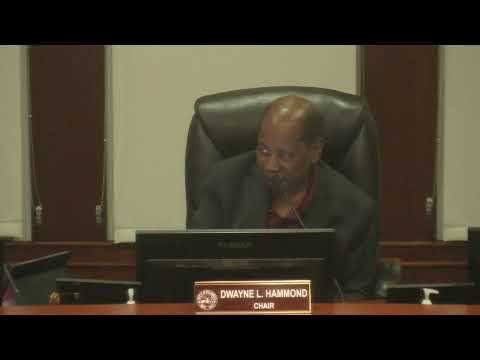
Commissioners said the changes aim to balance commercial development and walkable retail with traffic and site‑circulation constraints along Ramona Expressway. “I’d rather have a hotel than drive‑throughs,” Chair Hammond said as the commission discussed reserving pads for future hotel use; commissioners also stressed the importance of signal timing and intersection geometry at Nevada Avenue to prevent queueing on Ramona Expressway.
The commission’s action was a recommendation to the City Council. If council accepts the recommendation, the council will consider certifying the Final EIR and adopting Resolution 25‑24, the mitigation and monitoring program, findings of fact, and the statement of overriding considerations. Staff told commissioners they will clean up the resolution text and return the corrected document as a consent item to the commission before it goes to council.
The planning commission’s vote was 5‑0 (moved by Commissioner Lopez and seconded by Vice Chair Shively). The city planner and engineering staff said they will work with the applicant to finalize the conditions and the resolution language for council consideration.