
Antigo district posts gains on 2024-25 state report card while third-grade reading and achievement lag
Summary
Unified School District of Antigo officials said the districts 2024-25 state report card rose to 68.9 (meets expectations), driven by strong growth and gains at multiple schools, while achievement measures and third-grade reading (49%) remain areas for targeted improvement.
ANTIGO, Wis.
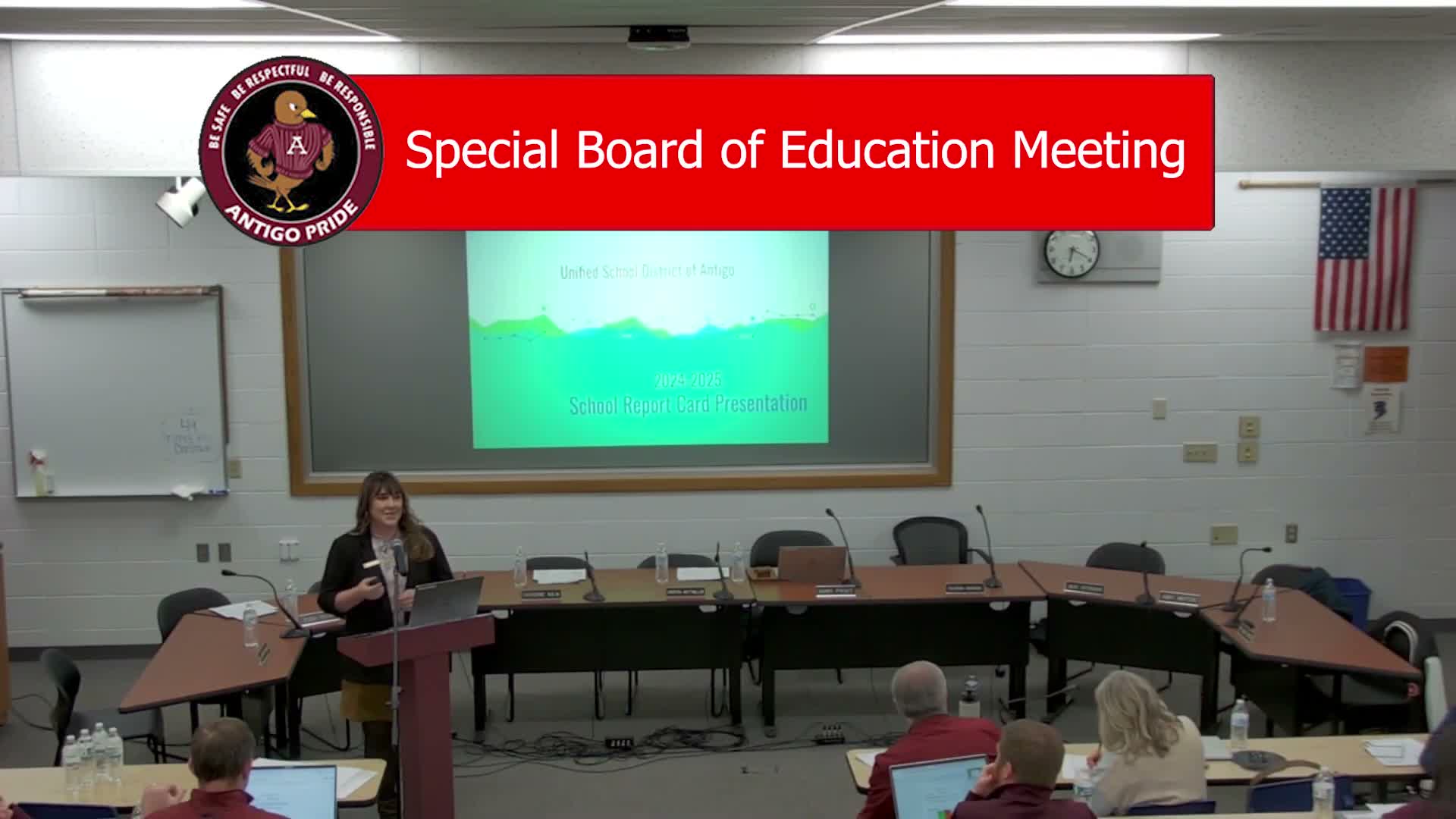
District leaders on Dec. 1 presented the Unified School District of Antigos 2024-25 state report card, reporting an overall district score of 68.9, categorized as "meets expectations." The presentation, delivered to the school board and community, credited significant gains in growth metrics while noting lower achievement scores and a third-grade reading indicator below the state average.
The districts growth component -- a value-added measure that compares students to demographically similar peers statewide -- was the presentations highlight. The districts growth score was reported as 71.7, which the presenters said places Antigo above most comparable districts. "We're on the right side of the bell curve," the presenter said when describing growth results and subgroup comparisons.
Achievement, which is calculated on a points-based proficiency system using multi-year averages, was reported at 57.6 and was identified as an area for improvement. Presenters explained that the achievement metric awards 1.5 points for "advanced" results, zero for "below basic," and averages across students to form the proficiency score. District leaders noted recent state adjustments to accountability thresholds for 2024-25 made some higher ratings harder to attain, affecting the high schools band despite year-over-year score increases.
The new third-grade reading indicator added to the state report card showed 49% of Antigo third-graders meeting the states reading benchmark; the presenter contrasted that with the statewide rate of 50.3% and said the district will target early-literacy supports. "Every number is a kid to us," the presenter said, underscoring that the metrics inform instructional priorities rather than define students.
School-level highlights included notable year-over-year jumps: East Elementary rose from 70.1 to 75.4; North Elementary moved from 54.3 to 63.1; West Elementary improved from 50.0 to 60.9; and the middle school climbed from 72.6 to 81.2. Presenters praised teacher and staff efforts and said the districts curriculum and intervention strategies, including double-block interventions and weekly progress monitoring, contributed to growth.
At the high school, presenters acknowledged both gains and challenges. The high school improved on several measures but was placed in a lower rating band under the 2024-25 accountability cutoffs. Administrators attributed that partly to the states updated scoring thresholds and to technical issues during the district's first administration of some new assessments, which they said the district is addressing through student training and revised test-administration protocols.
Administrators outlined steps to close remaining gaps: targeted interventions (tiered low/medium/high risk groups), instructional coaching and professional learning communities (PLCs), common formative assessments, and curriculum fidelity work with vendors such as Solution Tree. Principals also described school-level SLO goals, expanded small-group instruction and supports for special-education students.
Officials identified participation as a variable that affects result interpretation: the high school reported 39 students had opted out of the pre-ACT this year, which administrators said they are addressing through family outreach. They emphasized that the state report card uses multi-year weighting, so recent attendance and gains may not be fully reflected until future cycles.
The presentation concluded with district leaders urging continued focus on early literacy, achievement-level interventions and attendance improvements. The administration invited community questions and said winter AIMSweb benchmark data will provide a near-term check on the initiatives currently being implemented.
What happens next: District leaders said winter benchmark results will be shared with the board; principals will continue progress monitoring and report school-level changes as interventions are implemented.

Create a free account
Unlock AI insights & topic search