
Commission approves first reading of municipal judge ordinance; judge voices concern over 210‑day residency test
Get AI-powered insights, summaries, and transcripts
Subscribe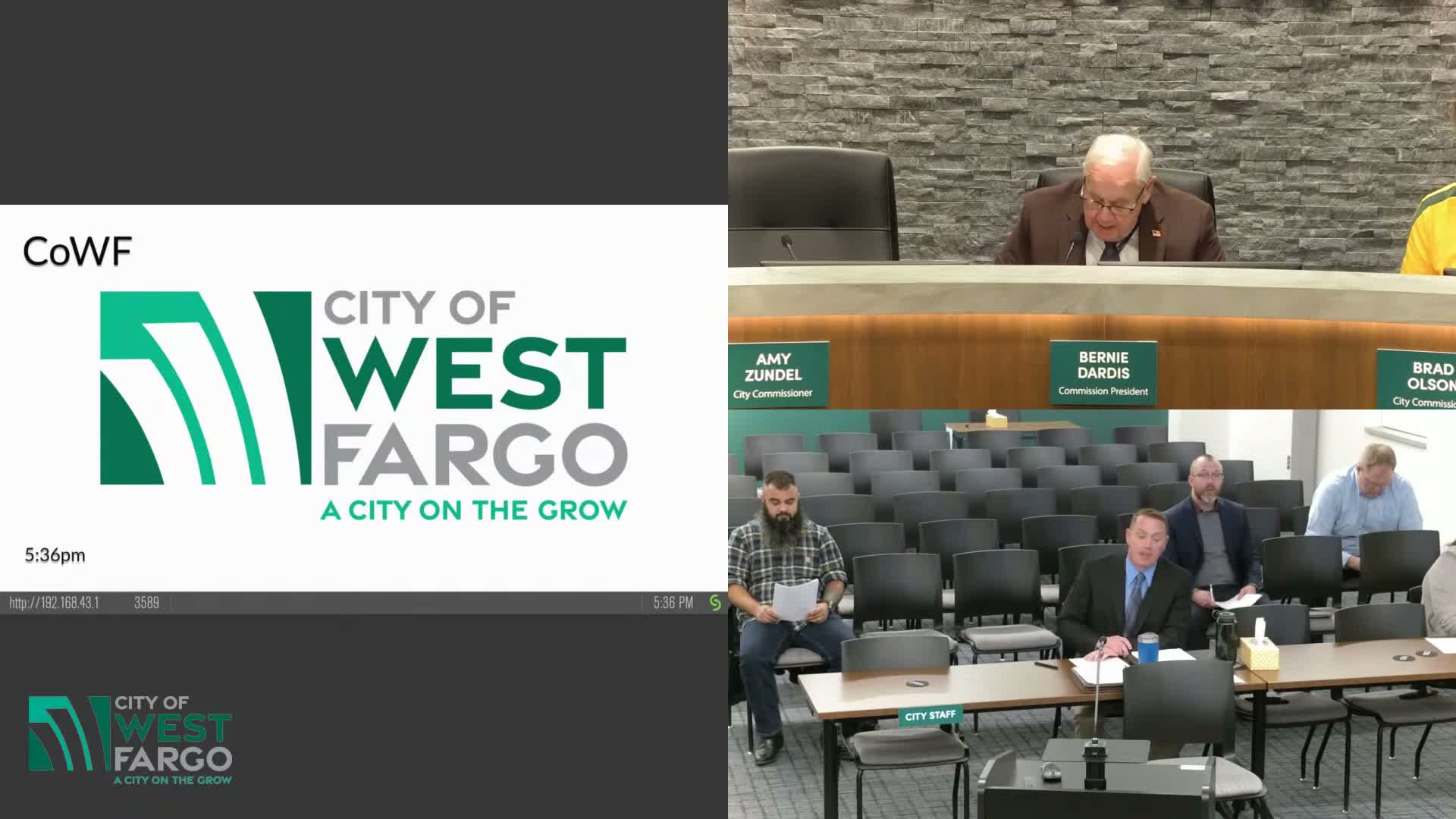
Summary
The commission advanced Ordinance No. 12‑66 on first reading to update municipal judge provisions and residency rules. Municipal Judge Trent Vargas gave neutral testimony, expressing concern about enforcing a 210‑day primary residency requirement for judges with travel or military service.
The West Fargo City Commission on Dec. 15 approved the first reading of Ordinance No. 12‑66, which reorganizes and updates the city's municipal judge provisions to align with state law and modern practice.
City Administrator Dustin Scott said the draft clarifies residency requirements for an elected judge while allowing the commission flexibility to appoint qualified nonresident alternatives when necessary and updates judicial duties, reporting and court convening provisions.
Municipal Judge Trent Vargas offered neutral testimony and said he supports most of the draft but raised a specific enforcement concern about the 210‑day primary residency standard. "My biggest concern with the current draft as listed, especially for the community of West Fargo, is the residency of days requirement," Vargas said, adding that travel for military service, business or secondary residences could complicate enforcement and eligibility for future judges.
City Attorney Katie Schmidt responded that North Dakota uses a primary residency test tied to tax rules and that the 210‑day figure comes from that standard. She emphasized the commission retains discretion to appoint alternate judges if a judge is absent.
Following questions from commissioners about how travel or military service would be treated, the commission voted to approve the ordinance on first reading. Commissioner Anderson moved to approve the first reading and Commissioner Jorgensen seconded; the motion carried by voice vote.
The measure proceeds to the next procedural step required by city code.