Get Full Government Meeting Transcripts, Videos, & Alerts Forever!
Get email alerts on the Elections Cvra topic
No spam. Unsubscribe anytime.
Attorney tells Palmdale council CVRA blocks legal route to at‑large mayor; residents promise ballot push
Summary
Attorney Kevin Shankman told the Palmdale City Council that California law and case precedents make restoring any at‑large elected position — including a mayor elected by the whole city — legally infeasible while the city uses a five‑district plan. Residents voiced disagreement and some said they will pursue a ballot petition.
Kevin Shankman, an attorney who has litigated voting‑rights cases in California, told the Palmdale City Council on Oct. 7 that current state law and court decisions bar the city from restoring any at‑large elected seat while it remains under a five‑district plan.
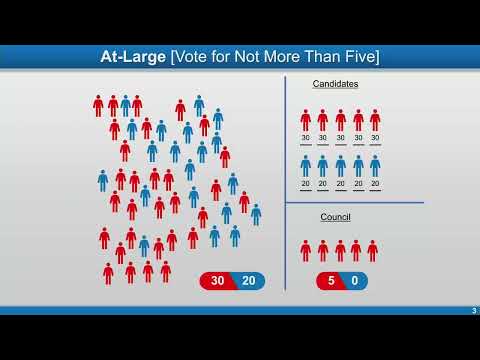
Shankman spent a 10–15 minute presentation outlining the three legal elements used to show a California Voting Rights Act violation — an at‑large method of election, racially polarized voting and vote dilution — and reviewed federal and state cases that shaped the law. He said the city’s move to five districts after litigation (Howeradee v. City of Palmdale) and subsequent state legislation (cited in presentation as Assembly Bill 2220 and Government Code guidance) mean a council ordinance cannot reintroduce an at‑large seat. He added that a voter initiative or charter amendment is likely preempted by Committee of 7,000 v. Superior Court, a California Supreme Court opinion that limits voters’ ability to remove powers the legislature has delegated to a local legislative body.
“Because Palmdale has adopted a five‑district plan and the statutes limit reversing that by local action, there is no straightforward legal path to create any at‑large elected position,” Shankman said during the presentation. He also noted that demographic shifts could change analyses in future litigation, but stressed the current statutory and case law framework constrains local options.
Councilmembers and residents pressed for clarification. Some members and speakers asked whether a renewed legal challenge could revisit earlier court findings; Shankman said changing circumstances and redistricting can alter the underlying analysis, but the statutory delegations and Committee of 7,000 precedent make a direct voter or council reversal legally risky and likely subject to court challenge.
Public commenters were split. Several longtime residents said they wanted the mayor elected at large and signaled they would circulate petitions to put the question to voters, while other residents and advocacy groups urged caution and highlighted the role district elections have played in improving representation for Latino voters in Palmdale.
The council allowed two‑minute public comments after the presentation; several speakers said they remain committed to pursuing ballot options if the council will not act. The presentation and the comments underscored a deep divide among residents over whether governance should be returned to an at‑large model or remain district‑based.
The council did not take formal action on the CVRA item after the presentation; staff and council members said they would continue to consult with outside counsel and produce written analyses for follow‑up deliberations.