
Timberlane administrators flag growing special-education and contracted-service costs as drivers of budget pressures
Get AI-powered insights, summaries, and transcripts
Subscribe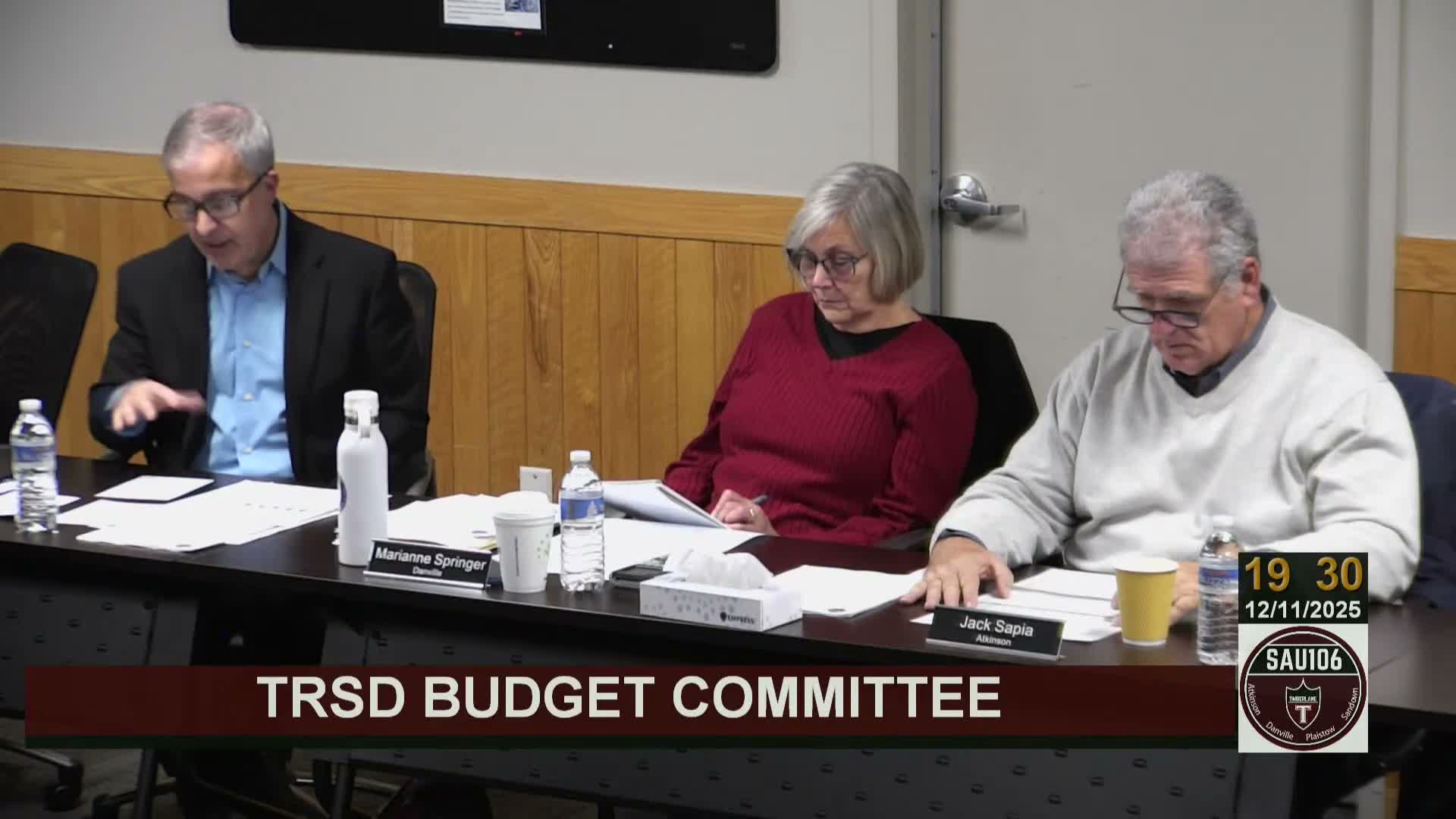
Summary
Superintendent and staff told the Dec. 11 joint meeting that special-education needs and the shift in contracted-service payment models have driven significant increases in the district's "professional services" budget line, helping explain the rise in the proposed FY27 number.
District administrators told the joint Timberlane meeting on Dec. 11 that rising special-education needs, the proliferation of charter and out-of-district placements, and changes to how contracted services are billed are key drivers of the increase in the district's FY27 proposed budget.
Superintendent Justin Krieger outlined open-enrollment law and recent legal interpretation, noting the New Hampshire Supreme Court has affirmed that the sending district is required to pay up to 80% of the tuition cost when a student attends an open-enrollment school. Krieger told the committee that open enrollment remains rare in New Hampshire but can shift costs between districts and that receiving districts may impose selection criteria.
On special education, district staff presented data showing the number of identified students and the growth in related-service needs: increases this year include roughly 10 additional students needing BCBA support at the elementary level, 28 more needing speech-language services, 30 more needing occupational therapy, and a projected 192 psychological evaluations this year (up from 70 in FY23). Administrators said the identification rate sits around 21% and that the district's net enrollment change has been relatively static while needs have grown.
Officials explained that the district's contracted-services line increased substantially since FY23 because the out-of-district tuition model separates tuition from additional services (a la carte), and charter-school placements and geography can require more contracting to deliver services at distance.
Board members pressed for evidence of the preventative effect of interventionists (MTSS) and asked whether investing in early childhood programs could reduce special-education growth over time. The administration said interventionist positions are part of a district multi-tiered systems-of-support (MTSS) approach intended to prevent downstream special-education placements.
What happens next: administrators said they would provide further breakdowns of contracted-services growth, the drivers of special-education cost increases, and the potential long-term effects of early-intervention investments as the budget process continues.