
Clinton board directs attorney to draft resolution after split over hospitality-venue moratorium
Get AI-powered insights, summaries, and transcripts
Subscribe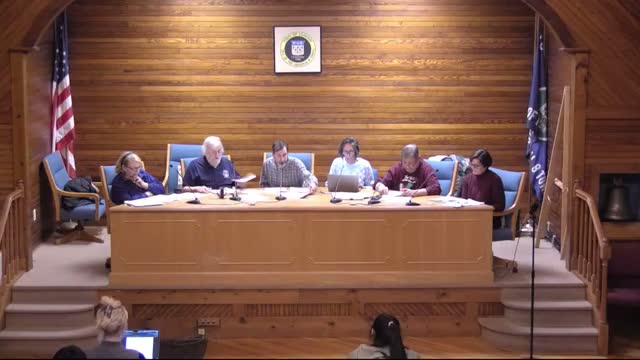
Summary
After debating three policy approaches, the Clinton Town Board agreed on guidance for the town attorney to draft a resolution that would broadly prohibit hospitality venues but carve out three existing applications through small zoning overlay districts; the Board also extended the existing six-month moratorium to allow time for drafting and public input.
Clinton Town Board members on Dec. 1 debated whether and how to limit future hospitality venues and directed the town attorney to draft a modified resolution that would generally prohibit new conference- and hotel-style venues while creating zoning overlay districts for three in-process applications.
Speaker 3 opened the discussion by noting that a six-month moratorium the board passed in July is set to expire in January and said the board “need[s] to extend it, and that’s for another 6 months.” He laid out three options under consideration: a townwide prohibition on hospitality venues; a zoning overlay regime permitting venues only in specific areas; or a narrower approach creating overlays just for three applications already in process.
Speaker 2 said the town planner’s recommendation included keeping a moratorium through the comprehensive-plan process to gather broader public input, but cautioned that “the town attorney is less sanguine about the prospects” of preservation-by-moratorium if the measure is legally challenged. Multiple board members raised the prospect of litigation: as Speaker 3 summarized, “there have been cases on both sides of the fence.”
The board discussed the three applications that would be treated as preexisting or otherwise exempt under several options: Six Senses (the application furthest along), Malaya Vineyard on Hollow Road and Camp Rising Sun on Center Road. As Speaker 3 explained, those three would be the focus of any overlay approach while other potential venues would remain prohibited.
After extended discussion of legal risk, community input and the technical difficulty of drafting comprehensive overlay zoning, the board coalesced around sending clear direction to the town attorney. Speaker 3 said he would “go back to the attorney and come up with a draft of a resolution … working with the existing draft that prohibits everything, modify that to exclude … and create these 3 overlay districts.” Several members voiced agreement and characterized that as the working consensus.
Next steps: the attorney will prepare the draft resolution and the board scheduled a public hearing related to moratorium actions during further proceedings. The board also noted that any moratorium extension or zoning change could be revisited after the comprehensive plan process is further along.