Get Full Government Meeting Transcripts, Videos, & Alerts Forever!
Get email alerts on the Land Use Dededication topic
No spam. Unsubscribe anytime.
Terrebonne Parish council delays new dededication process after residents, attorneys raise fairness concerns
Summary
After a lengthy public hearing, the Terrebonne Parish Council voted to delay consideration of a proposed ordinance creating a formal dededication process for public servitudes and rights-of-way, following objections from residents and counsel who said the draft could shift high legal costs to citizens and disadvantage low-income property owners.
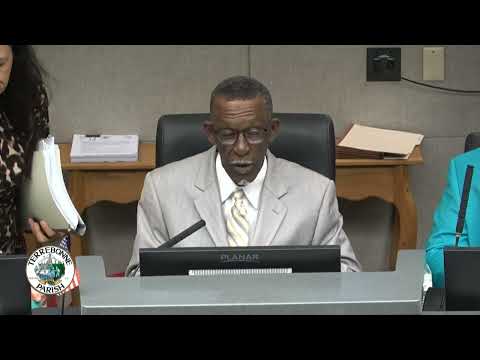
The Terrebonne Parish Council on Nov. 19 heard hours of public comment and council debate on a proposed ordinance to create a formal process for citizens to request revocation or abandonment of public servitudes, rights-of-way and other dedicated properties. The measure would add a new article and section (article 19, new section 2-590) to chapter 2 of the parish code to establish how dededication requests are handled.
Several citizens and private attorneys urged changes. Alec Ostheimer said the draft appears designed to require any applicant to pay all costs associated with a dededication request “whether approved or not,” which could discourage claims to restore property to the tax rolls and commerce. Dustin Pellegrin, who said he represents Price Brothers Shipyard, said his client spent about $20,000 trying to clarify title for a road in front of its property and warned that the draft could saddle landowners with open-ended legal fees. Both speakers urged the council to adopt a simpler, set-fee model used in other parishes.
Assistant parish attorneys responded that past dededication requests have required extensive interdepartmental review (utilities, roads and bridges, planning, records research) and that some requests ultimately proved impossible, yet still consumed parish staff time and legal work. Staff described records that are only digitized back to the 1970s or 1980s, requiring courthouse research for older dedications, and said the ordinance aimed to recover costs when extensive research is needed.
Council members questioned whether it is fair to charge property owners to regain land that may have been presumed parish property for decades. Several members suggested creating a public “bank” of past dededication requests or using a fixed fee rather than an open-ended cost-recovery model. Others noted the parish has, in prior cases, absorbed costs when the parish initiated dedications or when revocation was ultimately granted.
On a motion to delay further action and incorporate public and departmental input, the council voted unanimously to revisit the item at the council’s second meeting in February 2026. Council members asked staff to circulate a redraft and invited interested council members to participate in the revision process by contacting the assistant parish attorney.
The hearing record shows no formal ordinance adoption at this meeting; the council closed the public hearing, received public comment and moved to hold the proposal for further revision.