Get Full Government Meeting Transcripts, Videos, & Alerts Forever!
Get email alerts on the Lpo Ldo Update topic
No spam. Unsubscribe anytime.
Consultant outlines land development ordinance rewrite, warns state downzoning law limits local changes
Summary
CodeRight consultant Chad Meadows updated the Planning Board Dec. 2 on the LDO rewrite, described a schedule through 2026 and cautioned that a 2024 downzoning law and pending bills (HB765, HB622) restrict local authority to lower densities, change allowable uses or create nonconformities without landowner consent.
Town planning consultant Chad Meadows of CodeRight gave an in-depth status update Dec. 2 on Woodfin's land development ordinance (LDO) rewrite, described a timeline for drafting and testing and cautioned that recent state legislation has narrowed what local governments can lawfully change without landowner consent.
Meadows told the Planning Board the project experienced a delay while the team waited for clarity on session law 2024-57 (described in the meeting as a downzoning bill). He summarized three main constraints the law imposes unless local governments secure consent from affected landowners: they cannot lower residential densities, they cannot change the list of allowable uses in a zoning district from the June 14, 2024 baseline, and they cannot introduce nonconforming situations on land in nonresidential districts. Meadows said the law looks back six months, catching many changes made after June 12, 2024, and that several local governments are now reviewing prior text and map amendments for compliance.
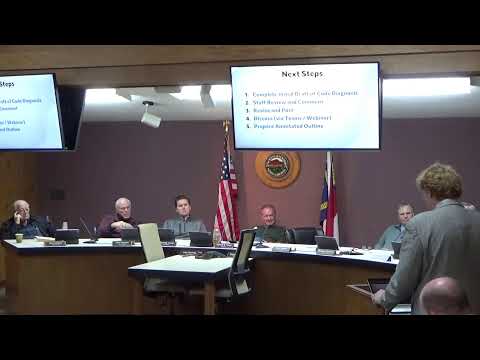
CodeRight previewed key deliverables: a code diagnosis document (detailed assessment of current regulations), an annotated outline (a dress rehearsal for the new LDO), initial drafts, testing with the development community, and a final adoption process. The consultant reviewed seven or eight "key themes" that will shape the LDO: making the document more usable; implementing policy guidance from Woodfin Together and other plans; improving procedural predictability; raising development-quality standards; incentives and flexibility for difficult sites; addressing ridgetop visibility and tree preservation; and broadening by-right housing options such as duplexes, triplexes and bungalow courts.
On strategy, Meadows proposed a grandfathering/amnesty approach to existing nonconformities at adoption, allowing structures that are nonconforming on adoption day to be rebuilt "as they were," while requiring compliance for subsequent changes. He warned the board that the law is likely to be litigated and flagged pending state bills (House Bill 765 and House Bill 622) that could further restrict local zoning authority. Meadows directed members to a project website (www.blueprintwoodfin.com) for materials and invited board members to office hours and outreach sessions as the team completes the code diagnosis and annotated outline over the next year.
Meadows recommended board members read the diagnostic reports and engage in the testing phase, noting adoption of the LDO will require multiple public steps and a formal council recommendation.