Get Full Government Meeting Transcripts, Videos, & Alerts Forever!
Get email alerts on the Planning Board Training topic
No spam. Unsubscribe anytime.
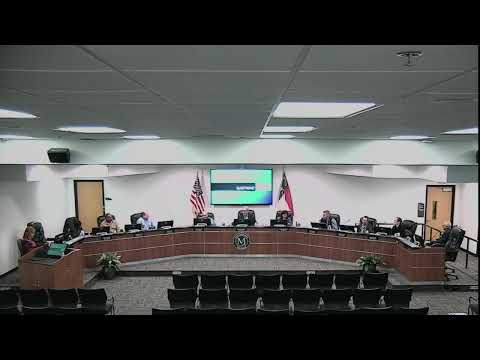
Mooresville planning board holds training on UDO, conflicts and decisionmaking
Summary
Planning staff led a training for the Mooresville Planning Board on the Unified Development Ordinance (UDO), the advisory role of the board, conflict‑of‑interest rules, permissible vs. impermissible considerations and best practices for preparing recommendations to the town board.
Planning staff led the Mooresville Planning Board through a comprehensive training on the board’s advisory duties, the town’s Unified Development Ordinance and the legal limits on decisionmaking.
The presentation, delivered by a planning department staffer (Speaker 4), outlined the board’s role in advising the Board of Commissioners on rezonings and text amendments, described the comprehensive land use plan as the guiding policy document, and emphasized that town authority in North Carolina exists only where the state grants it by statute. “You, as a planning board, are an advisory board,” Speaker 4 said, adding that “the governing board is not bound by your recommendation, but you do advise them.”
Why it matters: Board members recommended language of reasonableness and plan consistency in writing because courts will scrutinize the record if a land‑use decision is challenged. Speaker 4 reminded members that written recommendations are required within 30 days of a hearing and that statements of reasonableness should explain why a decision is in the public interest.
The session covered types of decisions the town and board handle — legislative (zoning amendments), quasi‑judicial (Board of Adjustment hearings), administrative (staff decisions) — and how each carries different procedural requirements. Speaker 4 warned that planning discussions can become legally vulnerable if board members rely on impermissible considerations such as race, religion, national origin, disability or familial status.
The training also addressed conflicts of interest and ethics. Speaker 4 summarized the standard for recusal: members must not participate in votes that would have a direct, substantial and readily identifiable financial impact on them or where a close familial or associational relationship exists. The staffer noted nonmonetary gifts are limited to $15 and that monetary gifts should be avoided.
Members and staff discussed practical items such as how much weight to give public comment, how to handle conditional vs. conventional rezonings, and procedural best practices for ensuring motions, discussion and recorded reasons are clear for the record. Speaker 4 advised members to review packets and written public comments ahead of hearings, notify staff of potential conflicts, inspect sites individually (not as a quorum), and avoid back‑and‑forth exchanges with the public on the dais.
The training closed with resources and encouragement to consult the School of Government and planning staff for follow‑up questions. The board moved on to routine procedural items after the presentation.