
Union detective urges ban on cryptocurrency kiosks after local scams cost $261,637
Get AI-powered insights, summaries, and transcripts
Subscribe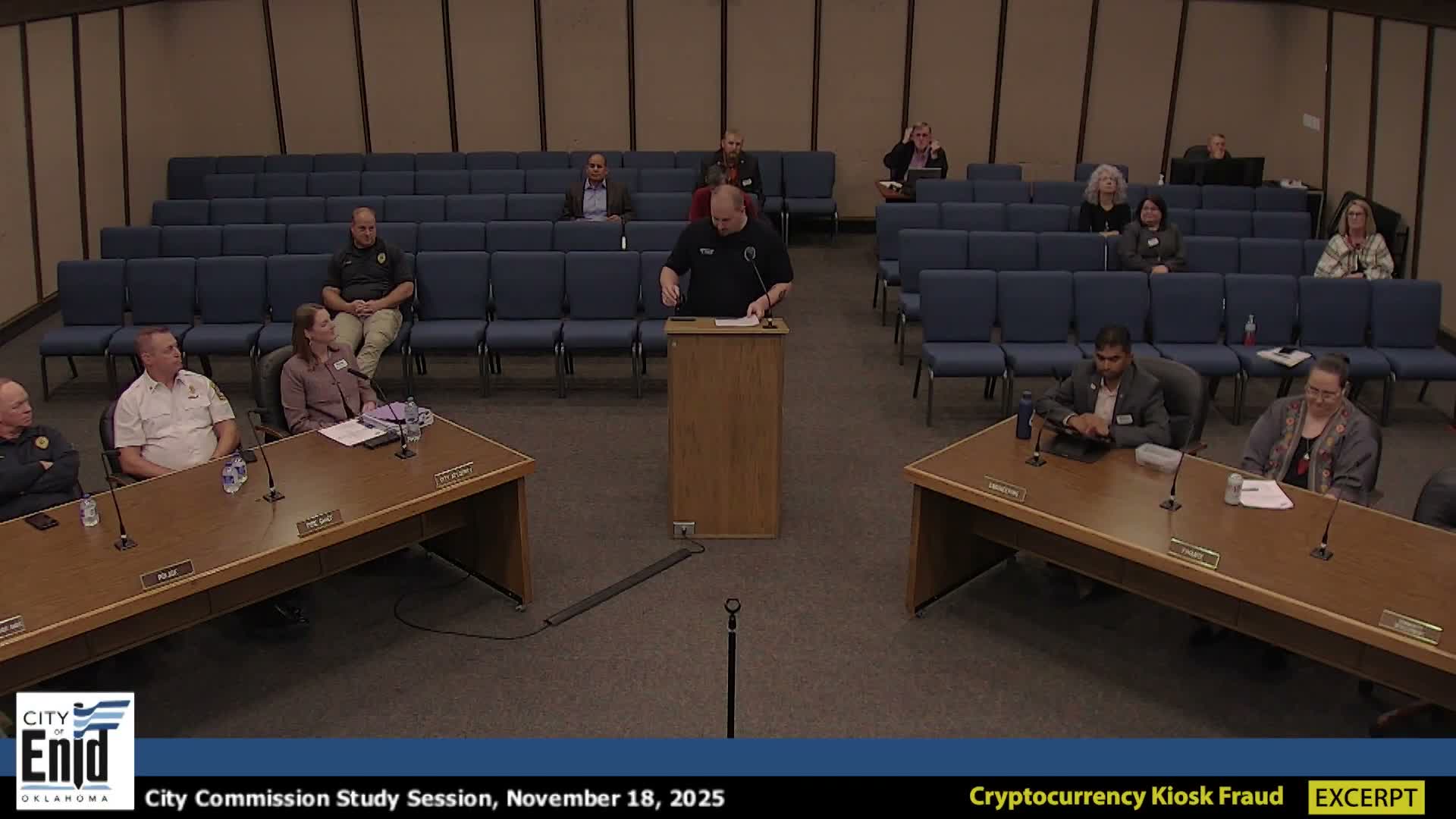
Summary
Detective Jones told the Mayor and Board Commissioners that Bitcoin ATMs have facilitated fraud against local residents — 16 cases this year, 12 victims over age 70, and about $261,637 lost — and proposed a temporary ban while staff pursues legal clarity and coordination with the Banking Association.
Detective Jones of the Union Police Department told the Mayor and Board Commissioners that cryptocurrency kiosks, commonly called Bitcoin ATMs, have been used in local scams that cost Enid residents about $261,637 this year. Jones said the department has logged 16 cases, including 12 victims older than 70 and one loss of $70,000, and proposed “an outright ban on these machines, at least until we can get the case law settled.”
Jones described a typical scam: fraudsters impersonate banks or federal agencies, create a sense of urgency, instruct victims to withdraw large sums of cash and deposit it via a kiosk or into a wallet the scammers supply. He said kiosks charge high fees—“around 25%,”—and that courts currently treat victims as having lawfully purchased Bitcoin, which means restitution, where awarded, is for cryptocurrency rather than cash. “In Enid alone this year, we've seen 16 cases involving these kiosks,” Jones said, and later quantified the community loss as “about $261,637.”
Commissioners and other speakers asked whether state law would limit local action. Jones and city staff cited Title 75A and recent state legislation (discussed in the meeting as Senate Bill 1083 and a House bill referenced as “House bill 35 94”), and warned that statutory language affirming private rights to own and trade cryptocurrency could constrain any ban that attempted to curtail ownership or lawful trading. City staff (Speaker 6) said she is still researching legal authority, has contacted the state Banking Association, and described current state licensing requirements for kiosk operators, including a $500,000 bond and fraud-prevention plans, and the possibility of enforcement through the Banking Department and law enforcement.
The board did not vote. Jones’s presentation functioned as a policy request and information briefing; commissioners asked questions about machine counts (Jones estimated “approximately 30” machines in town, down from 44 a few years ago), whether removing kiosks would have prevented the losses, and whether banks or kiosk hosts could be held accountable. Staff recommended continued research, partnership with an existing elder-abuse task force, and public outreach; one speaker suggested the communications office run public service announcements and to coordinate with Derek Silas in communications. The meeting ended with commissioners asking staff to keep the board informed about follow-up and potential enforcement or local measures.
The next steps are research and interagency coordination: city staff will continue to review state statutes and case law, work with the Banking Association and law enforcement, and report back to the board before any formal ordinance or ban is introduced.