Get Full Government Meeting Transcripts, Videos, & Alerts Forever!
Get email alerts on the Water Rates topic
No spam. Unsubscribe anytime.
City proposes 2026–28 water, sanitary and storm rate increases; department outlines investments and affordability plan
Summary
The water department recommended rate increases for 2026 (water 8.5%, sanitary 9.5%, storm 2.5%) and projected similar increases through 2028; the presentation cited $461 million invested since 2013, innovations that cut testing and debt costs, and planned customer outreach and assistance partnerships.
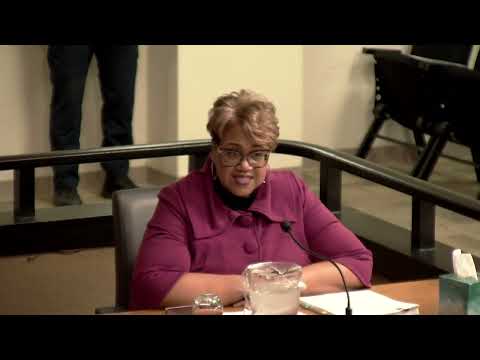
Keisha Kenny, introduced by staff as the director of the water department, presented recommendations for utility rate adjustments covering 2026 through 2028. "So for 2026, on the water side, we're looking at having an increase of 8.5%, on sanitary 9.5, and on storm of 2.5%, which altogether for that utility is about 8.5% or $24 per quarter increase," Kenny said.
Kenny framed the proposal as continuing investments in infrastructure dating to 2013: the department reported about $461 million invested since 2013 and highlighted a recent large wastewater project she described as a $138,000,000 anaerobic-digester investment. She said investments and steady rate adjustments aim to avoid the sharp spikes that occur when systems fall behind on maintenance and capital replacement.
Kenny described cost-saving measures intended to limit rate pressure: the city performs some water testing in-house (including PFAS certification) and reported about $100,000 annual savings from that work; the department also refinanced older debt, yielding a roughly $1.5 million savings. "This is our way of trying to keep our costs low as we continue to go through," she said.
On affordability and outreach, Kenny said Dayton remains below the EPA affordability threshold (cited at about 4.5% of median income) and estimated the utility share at roughly 2.79% for 2026 rising to about 3.2% by 2028 under the proposal. She listed communications plans including social media, bill inserts and neighborhood outreach, and said water/finance staff currently partner with social-service agencies to help customers who struggle to pay and are exploring bringing some assistance programming in-house as systems are modernized.
Commissioners pressed staff on the long-term trajectory of rates and customer protections. Commissioner Charles Lawson asked whether the program will require more increases after 2028; Kenny said inflation and regulatory requirements make future increases likely. Finance staff clarified that the billing format includes an early-payment discount, not a late payment penalty, and described available assistance and referral pathways for customers.
The commission accepted the senior manager's recommendations (which included the presented items on the calendar) by unanimous voice vote; Kenny and staff said they would continue outreach and provide additional details where requested.