
Stoughton officials report growth, high performance in English‑learner programs
Get AI-powered insights, summaries, and transcripts
Subscribe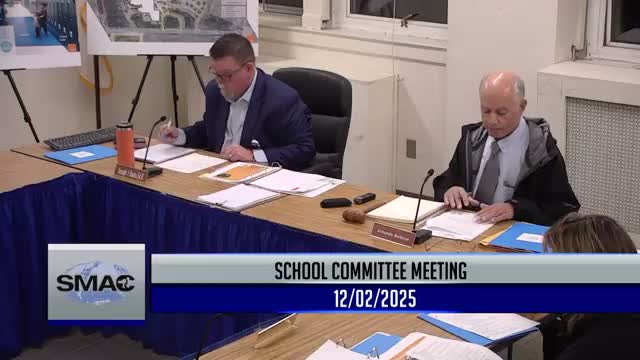
Summary
Multilingual director Amy Qualey told the school committee the district now serves about 700 English learners and former English learners, has seen a 54% increase since 2020, and reported the highest regional progress rate for EL students on state measures; district is using Title III funds for extended‑day, summer and newcomer programs and piloting elementary Portuguese literacy.
Amy Qualey, the district’s multilingual director, told the Stoughton School Committee that Stoughton now serves roughly 700 English learners and former English learners and has seen ‘‘a growth rate of 54% of English learners and former English learners in just 5 years.’’ She said that, excluding temporary shelter populations, the district is ‘‘right about where we were in 2013, with around 600’’ English‑learner students.
Qualey described the district’s screening and support process: parents complete a home‑language survey at registration; students identified with another language are screened with the WIDA screener (the state‑mandated tool) and are assessed annually using the ACCESS test each January to track progress. She summarized state rules that newcomers with no English receive 90 minutes of direct ESL instruction daily from a licensed ESL teacher, while intermediate students receive 45 minutes daily.
‘‘So we are the highest performing English learner district of the districts in our Southeastern hub,’’ Qualey said, citing the district’s progress rate on state metrics and noting that Stoughton reached about 56% of ELs on track to the state exit benchmark for 2024–25. She also reported that 74 students took the district’s Seal of Biliteracy exam last year and 65% met the seal requirements.
Qualey said Title III federal grant funds are being used for extended‑day programming, summer learning for grades 6–12, newcomer summer programs, MTEL/teacher certification support and tutoring. At the elementary level the district uses evidence‑based literacy interventions; at the high school there are math and homework supports and multiple language clubs.
She described a middle‑school pilot teaching Portuguese literacy to a small cohort of sixth graders to measure whether home‑language literacy supports English acquisition and said Elizabeth Dupree has joined the district as assistant multilingual director to help implement such initiatives.
Qualey identified staffing as an ongoing challenge. She said the multilingual team includes about 25 EL staff (roughly 19 teachers, five paraprofessionals and one part‑time multilingual counselor) and recommended adding a full‑time multilingual counselor to support alignment from middle to high school and to improve graduation outcomes for older students who arrive with incomplete transcripts.
The committee asked about how students exit EL services and how long they typically remain in program levels; Qualey explained the annual ACCESS assessment and state guidance that students are expected to reach proficiency within about six years, although language acquisition theory indicates several years of development. She also described Individual Language Plans (ILPs) for students not meeting benchmarks and the district’s monitoring of former English learners.
Committee members praised the results and asked follow‑up questions about program cost and staffing alignment with the district’s triennial plan. Qualey said the district is aligning world‑language and ESL curricula to WIDA and ACTFL standards and will continue evaluating elementary language options within the triennial review process.
The committee will continue to monitor program data and staffing as part of the district’s budget and planning cycle.