Get Full Government Meeting Transcripts, Videos, & Alerts Forever!
Get email alerts on the School Improvement Dashboard topic
No spam. Unsubscribe anytime.
Talbot County Public Schools rolls out interactive school-improvement dashboard to align goals and track implementation
Summary
District leaders described a new school-improvement process and interactive dashboard rolled out July 2024 that requires needs assessments, SMART(E) goals tied to student groups, and a 4-point rubric to monitor implementation; principals and teacher leaders are involved and the board will receive dashboard access.
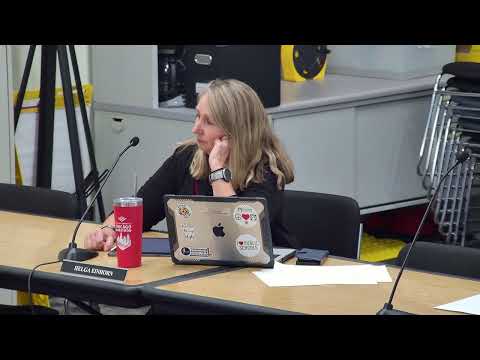
Dr. Einhorn, presenting on behalf of district leadership, described changes to Talbot County Public Schoolsschool improvement work, including a new interactive dashboard launched in July 2024 and a revised planning rubric. "School improvement, when implemented well, is a key lever for improving outcomes for students," Dr. Einhorn said, outlining a process that moves from a needs assessment to SMART(E) goals identifying student groups "furthest from that" proficiency target.
Why it matters: The dashboard replaces a static Word template and was developed by a committee convened in April 2024 that included district staff, school leadership and teachers. The tool is intended to make needs assessments, goals, action steps, artifacts and progress transparent and consistent across the district. Dr. Einhorn said schools must set literacy and math goals and a third school-specific goal tied to accountability measures; the dashboard also includes artifact uploads and a 4-point rubric that rates implementation stages (developing through exceeding).
Board feedback and timing: Board members asked about access to the dashboard and timelines for needs assessments. District staff said school dashboards and a district landing dashboard will be presented to the board on Wednesday; they described an ambitious timeline in which MCAP state data (received mid-July) and local analysis are used to complete needs assessments by early September so goals and teacher SLOs align with school improvement plans. The district acknowledged the timeline is ambitious and some strategies require multi-year implementation.
Equity and specificity: The revised approach requires schools to identify which student groups are "furthest from meeting proficiency" and to craft targeted strategies. Dr. Einhorn emphasized that naming groups is not punitive but necessary to plan effective, equitable interventions.
Next steps: The district will demonstrate the dashboard to the board and plans ongoing professional learning and artifact collection so the board and district teams can monitor implementation; principals will present plans to district teams to clarify needed supports.