
Harper Creek trustees discuss bus fleet replacement plan, weigh leasing versus phased buying
Get AI-powered insights, summaries, and transcripts
Subscribe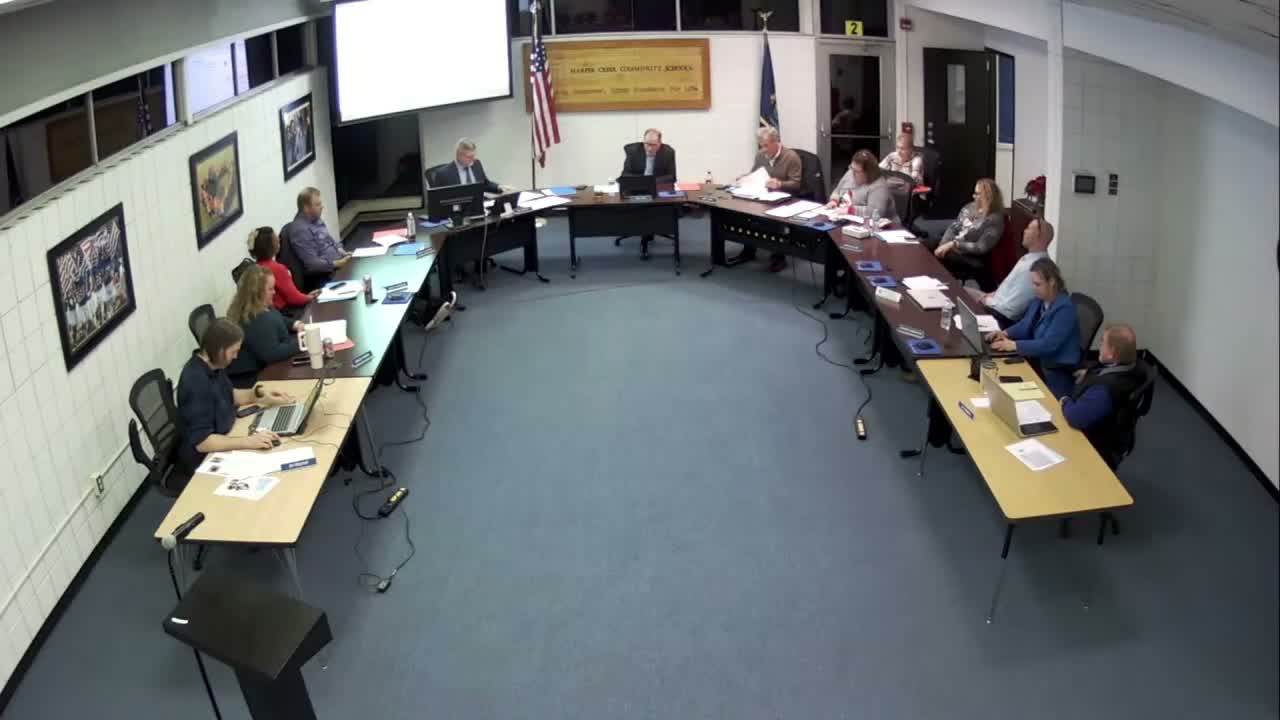
Summary
Board and transportation staff reviewed options to address an aging fleet: a lease quote for 18 buses, or buying three buses per year funded by casino revenue plus $100,000 general-fund contribution over four years; members favored keeping a district-owned fleet and recommended budgeting $200,000 (casino) plus $100,000 (general fund) annually as a starting assumption.
Harper Creek Board members and transportation staff spent the meeting outlining options to address an aging bus fleet and potential budget approaches to replace vehicles over the next four years.
Superintendent Speaker 1 briefed the board that the district’s fleet of 32 buses includes many vehicles from 2009–2010 and that average fleet age is closer to nine years; a typical bus life cycle is roughly 15–17 years. A Midwest Transportation lease proposal for 18 buses was cited at $540,000, but that would not cover the entire 32-bus fleet. Speaker 1 said buying three new buses per year for four years—paid partly with casino funds (existing spend) plus a recommended $100,000 per year from the general fund—would better preserve district ownership and flexibility.
Board member Speaker 3 said the board should include budget assumptions of $200,000 in casino funding plus $100,000 from the general fund (a $300,000 starting assumption) for the coming budget cycle. Several members cautioned that leasing often transfers control to a vendor or bond holder and can be difficult to reverse; the board expressed a preference for maintaining an owned fleet if financially feasible.
Operational concerns included parts backorders for older models, lift-bus retirements and routes, and driver run patterns that limit the immediate feasibility of electric buses unless grant funding or bond funds are available to upgrade facilities. Speaker 7 reported difficulty sourcing parts for buses manufactured in 2009–2011. The board asked staff to use the recommended assumptions in the budget process and to return with a refined capital schedule and cost estimates.
Next steps: staff to include the $300,000 assumption (200,000 casino + 100,000 general fund) in budget materials, present a multi-year replacement schedule, and identify grant opportunities for electrification or facility upgrades.