
Local legislators tell Yankton board property taxes, school funding and tech policy will dominate 2026 session
Get AI-powered insights, summaries, and transcripts
Subscribe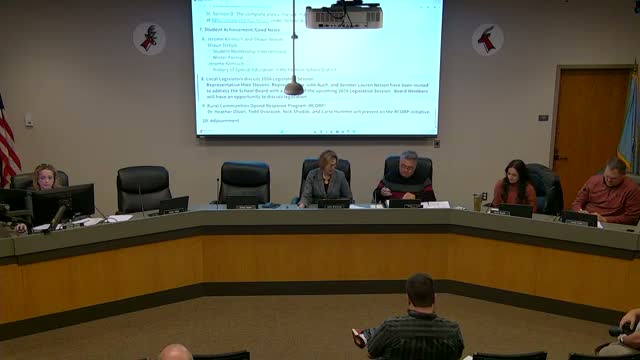
Summary
Representative Julie Elk, Senator Lauren Nelson and Representative Mike Stevens told the Yankton School Board that property-tax bills, school funding debates and possible statewide technology restrictions are likely priorities in the 2026 legislative session, and they urged local leaders to remain engaged.
Three state legislators met with the Yankton School Board to preview issues expected in the 2026 session and to hear district priorities.
Representative Julie Elk said property taxes would be a leading topic and emphasized education—s stake in property-tax discussions. "Property taxes are a burden in some segments of our state," Elk said, and she warned the board to anticipate legislation affecting local school funding.
Senator Lauren Nelson cited dozens of property-tax proposals and said some bills could centralize funding. "Last I heard, there's 16 bills coming with property taxes," Nelson said, and she named one proposal that would shift special-education and general-fund dollars to the state level. Nelson also flagged debates over classroom technology and local control, describing a push to impose statewide restrictions on devices in schools.
Representative Mike Stevens described the compressed 38-day session and urged fiscal caution. He noted competing priorities and the erosion of purchasing power when pay increases are set at zero amid inflation. "If you don't fund it, it's not going to work," Stevens told the board when discussing school-funding formulas.
Legislators also discussed juvenile-justice efforts, mentoring programs and the importance of clear data on home-school registration. The board raised local fiscal options, including whether to restore a 0.3 percentage-point sales-tax portion that currently sunsets in 2027; one board member estimated restoring that half-cent could generate about $105 million annually, a figure legislators said would factor into upcoming debates.
Board members thanked the legislators and invited them to contact the district on specific policy impacts. The session provided district trustees a chance to ask for targeted attention to school funding, student services and local control in the upcoming legislative debate.