Get Full Government Meeting Transcripts, Videos, & Alerts Forever!
Get email alerts on the Student Belonging Survey topic
No spam. Unsubscribe anytime.
Springfield Township reports high belonging scores overall, board targets gaps for some Black students
Summary
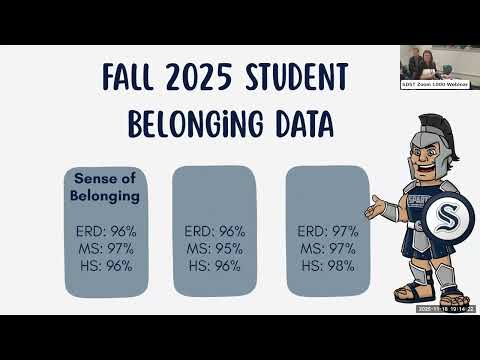
Director of support services Michelle Lutz told the board that annual student belonging survey results are strong districtwide (mid‑to‑upper‑90s on core questions) but show a 4–7 percentage‑point gap for some African American students at Erdenheim; building teams will produce action plans to address disparities.
Michelle Lutz, the district’s director of support services, presented results of the district’s fourth annual student belonging survey on Nov. 18, saying participation improved after administrators reduced the survey from three times a year to a single administration.
The survey covered students in grades 3–12 and included nine multiple‑choice items plus an open response. Lutz said participation was high at several schools — "86.4% of students at the middle school, and 73.4% of students at the high school" — and that the district continues to score in the mid‑to‑upper‑90s on core measures such as sense of belonging, availability of trusted adults, and feeling safe at school.
Why it matters: High self‑reported belonging and trust are linked to attendance and academic engagement, but administrators said disaggregated results revealed persistent gaps that require targeted interventions.
Lutz said the district had aligned family and student surveys to reduce past misalignment and improve comparability. She also described the district’s focus on disaggregating data and creating building‑level action plans: "We're really digging into that and trying to find out what students are feeling and why they're reporting a lower sense of belonging in those areas." The presentation noted a 4–7 percentage‑point gap between overall results and the responses from some African American students, particularly at Erdenheim.
Board members asked whether the 4–7 point variance represents a multi‑year trend; Lutz replied the gap has fluctuated and that there is "no real trend in terms of upwards or downwards movement" but that the data are being used by building teams to inform action plans. She said participation among families remains an area to improve, with family response rates ranging in the low‑ to mid‑teens at some schools.
The district will continue to disaggregate survey results, meet with advisory and affinity groups for on‑the‑ground feedback, and post findings on the district equity website and in the equitable practices newsletter. Administrators said parent and student engagement will inform specific interventions at the building level.
The board did not take additional formal action on the survey at the Nov. 18 meeting; members directed that findings be integrated into building action plans and monitored through committee reports.