Get Full Government Meeting Transcripts, Videos, & Alerts Forever!
Get email alerts on the Child Welfare Reform topic
No spam. Unsubscribe anytime.
County reports progress on child‑welfare corrective actions, pilot social‑worker program, and studies of voluntary services
Summary
DFCS told supervisors it has closed many items in its corrective action plan, launched a pilot placing hotline social workers in schools, and found higher engagement in voluntary services reduces subsequent court involvement; the board asked that DFCS bring evaluations to relevant commissions and the child‑welfare roundtable.
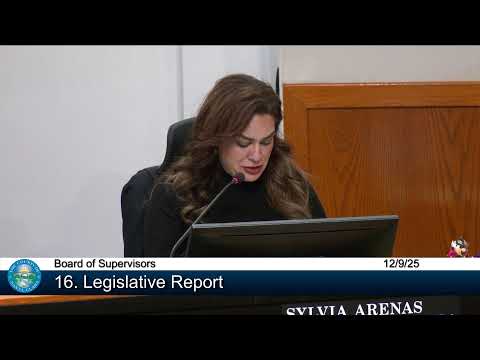
The Department of Family and Children Services (DFCS) reported to the board on Dec. 9 that it has made sustained progress on corrective actions demanded by the California Department of Social Services and is piloting school‑based hotline social workers and other reforms.
DFCS reported that 41 items on its corrective action plan have been signed off by state reviewers and many additional items are in process. The department said it has deployed coaching, quality‑assurance tools, and updated supervision templates to improve risk assessment and casework consistency; the department reported SDM (structured decision‑making) completion rates above state thresholds for several months.
At the board’s request, DFCS evaluated voluntary‑services cases (109 families of children birth–5 with closed cases in Apr. 2023–Apr. 2024) and found that families with higher engagement were less likely to re‑enter the system and that longer engagement (approaching six months) was associated with lower likelihood of court intervention. DFCS said it has introduced structured 30‑day and 90‑day engagement evaluations and is expanding Spanish‑language and intimate‑partner‑violence services where needed.
The department also presented a dually‑involved youth study: many youth who enter juvenile justice had prior child‑welfare referrals and varying behavioral‑health needs; DFCS and probation plan to use the analysis to guide joint adolescent‑wellness strategies. DFCS has launched two school‑based hotline social‑worker pilots (Gilroy Unified and Franklin‑McKinley), with outreach and data evaluation planned.
Supervisors asked that DFCS present existing evaluation reports (voluntary services, dually involved youth) to the Child Abuse Prevention Council, Juvenile Justice Commission, and the newly formed child‑welfare roundtable, and that DFCS return to committees with recommendations including recruitment of bilingual staff and an actionable childcare blueprint to support young parents from foster care.
Why it matters: The corrective action work addresses state concerns about case practice and aims to reduce future harms to children; evaluations show voluntary services can prevent court involvement when families engage. The dually‑involved youth findings highlight a group with high unmet behavioral‑health needs that require cross‑agency coordination.
What’s next: DFCS will continue corrective actions, expand the school‑based social‑worker pilot evaluation, and return with childcare‑blueprint recommendations and reports to commissions and committees as requested.