Get Full Government Meeting Transcripts, Videos, & Alerts Forever!
Get email alerts on the Environmental Health Fees topic
No spam. Unsubscribe anytime.
Board approves environmental‑health fee changes but delays food‑service and body‑art increases
Summary
After a NBS study showed environmental‑health fees covered about 82% of costs, the board voted to adopt a comprehensive fee schedule to reach full cost recovery but agreed to hold food‑facility and body‑art permit increases for additional review and outreach, directing staff to return in January with comparative analyses.
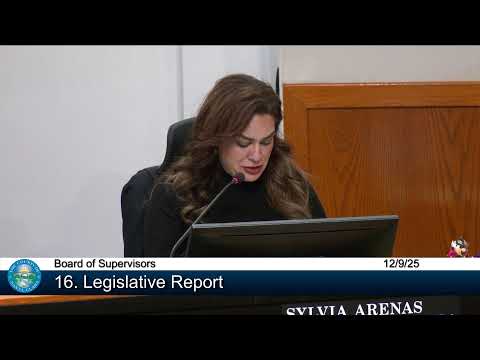
The Board of Supervisors voted Dec. 9 to adopt a revised environmental‑health fee schedule aimed at moving the department from roughly 82% to 100% cost recovery, but set aside the food‑facility and body‑art permit components for further study and outreach.
Dr. Sarah Rudman, director of the County Public Health Department, and Marilyn Underwood, Environmental Health director, presented a fee study produced by NBS that compared Santa Clara County’s fees to peer Bay Area counties and calculated hourly rates and direct/indirect costs. Underwood said the department would like to bring fees to full cost‑recovery because the program receives no general‑fund support.
Underwood told the board staff mailed about 17,000 postcards to annual permit holders and received limited substantive feedback; she said some fees (for example, certain lower‑risk food permits and charitable feeding operations) were reduced in the proposal while others were increased and that solid‑waste facility realignment drove substantial dollar changes for a small number of large facilities.
Supervisors and industry representatives pressed staff on small‑business impacts. Supervisor Ellenberg proposed — and the board accepted — adopting most fees now while holding the food‑facility and body‑art categories for a January follow‑up that will include additional comparative studies and options for grants or general‑fund assistance to mitigate impacts on smaller establishments.
The motion to adopt the resolution as amended (excluding food‑service and body‑art permit changes) passed unanimously. The board also asked staff to include updated comparator data (including fee updates from Contra Costa County) when they return in January.
Why it matters: Environmental‑health permits are generally fee‑funded and enable safe operation of food facilities, body‑art studios, solid‑waste facilities, and other regulated businesses. Bringing fees into alignment with the department’s workload affects local businesses, program sustainability and the department’s ability to maintain timely inspections and permitting.
What’s next: Staff will return in January with additional comparative analyses and options for small‑business relief for food‑facility and body‑art permit categories; other fee changes will take effect on a rolling basis in January as annual permits renew.