
Cupertino council asks MTC/ABAG to explain Plan Bay Area 2050+ growth assumptions, authorizes comment letter
Get AI-powered insights, summaries, and transcripts
Subscribe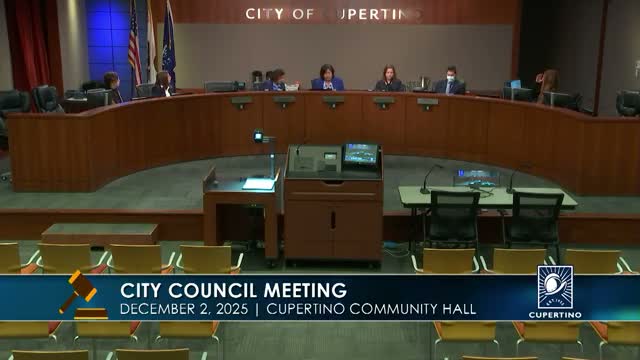
Summary
The Cupertino City Council voted to submit the draft comment letter on the Plan Bay Area 2050+ draft EIR and to send a separate cover letter to MTC/ABAG leadership requesting an explanation of the plan’s growth assumptions; the motion passed with one abstention.
The Cupertino City Council on Dec. 2 voted to authorize submission of a written comment on the draft Plan Bay Area 2050+ environmental impact report and to send a cover letter to MTC and ABAG leadership asking for an explanation of the regional growth assumptions.
Council members agreed to have city staff fact-check and vet the draft before submission and to request that MTC/ABAG explain how the plan’s population and job projections were developed. The motion to submit the comment letter and send an explanatory cover letter carried with Council member Fruin recorded as abstaining and all other members voting yes.
The council’s action was prompted by concerns raised during a presentation and the public comment period that the regional plan’s projections could push upzoning requirements, create legal exposure under state housing laws and impose large infrastructure obligations. In the council record the presenting speaker argued the Bay Area projection used a 2021 pre-pandemic baseline and a “jobs-first” economic model, producing higher household forecasts than other sources; the presenter cited a draft EIR notice estimate of about $862,000,000,000 in new revenue needs across the region and said that, divided by the Bay Area population, amounts to roughly $100,000 per person as presented in the packet.
Public speakers told the council they were alarmed by the plan’s methodology. Jennifer Griffin, who described herself as affiliated with Catalyst for Local Control, told the council that “they did not use the required data that the state requires for population statistic analysis,” and said the plan’s figures amounted to “one of the biggest frauds against the state.” Louise Sadati urged the council to prioritize meeting HCD housing-element requirements to avoid Builders Remedy consequences, calling the risk “the big issue here.”
Council members debated what figures currently govern local housing targets and RHNA methodology. Several members noted that Plan Bay Area 2050 is already adopted and that ABAG/MTC have a separate methodology for allocating RHNA numbers; others argued it remains valuable to press MTC/ABAG to justify or revise assumptions because those regional numbers ultimately influence local planning and grant eligibility.
Mayor Chow (in the meeting record) emphasized using the EIR comment period to raise questions and asked staff to ensure the city’s letter focuses on infrastructure, wildfire-evacuation, flood and public-safety impacts, and to clearly identify funding gaps and who would pay for mitigation. The council asked staff to fact-check the draft before posting the comment and agreed to send an additional cover letter addressed to MTC/ABAG leadership requesting an explanation of the growth numbers.
Next steps: staff will finalize the city’s comment to the EIR (the deadline referenced in council documents is Dec. 18 at 5 p.m.), perform a final fact check and submit the comment. The council’s cover letter to MTC/ABAG leadership will request an explanation of methodology and the basis for the population and job projections.