
Board approves revised Read to Achieve summer schedule and a request for ABA services
Get AI-powered insights, summaries, and transcripts
Subscribe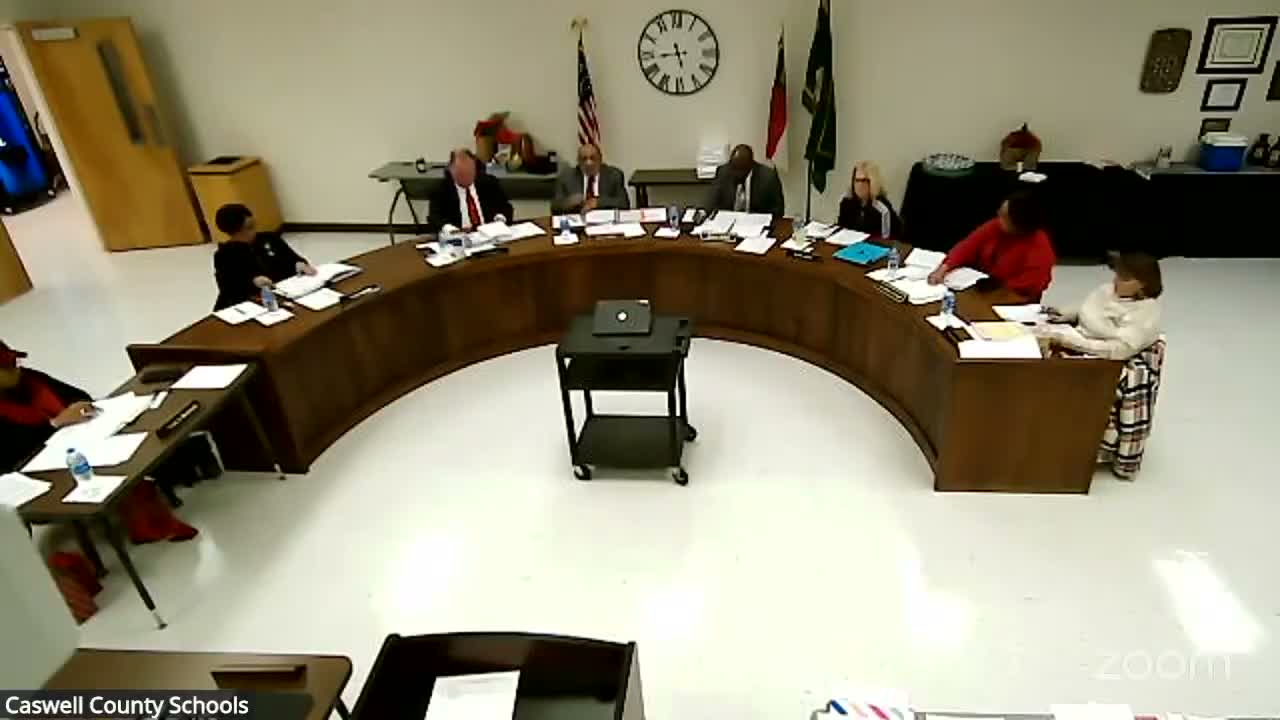
Summary
Caswell County board approved a shorter, earlier Read to Achieve summer camp (3 weeks after required workdays, slightly longer days) and authorized posting an RFP to prequalify Applied Behavior Analysis providers; staff said ABA services will be funded with Medicaid-reimbursable funds (Fund 2).
The Caswell County Board of Education approved two program items at its December meeting: a restructuring of the Read to Achieve summer program and the posting of a request-for-proposals for Applied Behavior Analysis (ABA) services.
District staff asked to shift the Read to Achieve program for eligible first- through third-grade students from a four-week July model to a three-week schedule held immediately after required workdays in June. Staff explained they would lengthen instructional days by about 30 minutes so the program meets state requirements while reducing total days and lowering costs. The director said shifting the dates also improves staff continuity and family planning; the board voted to approve the logistics as presented.
Separately, staff requested permission to post an RFP to prequalify ABA service providers so the district can partner directly with qualified vendors for students who have IEPs and require applied behavior-analysis supports. Staff said these services can be covered by Medicaid-reimbursable funds (Fund 2) and by special-children allocations; the board approved posting the RFP (motion carried 7–0).
The superintendent also reported district highlights, including growth measures and external grants; staff noted the district had won needs-based grant dollars for facility improvements and described plans for additional behavior-support positions funded through targeted state allocations.