
Board treats remote learning as a last resort; directs staff to produce level-by-level plan
Get AI-powered insights, summaries, and transcripts
Subscribe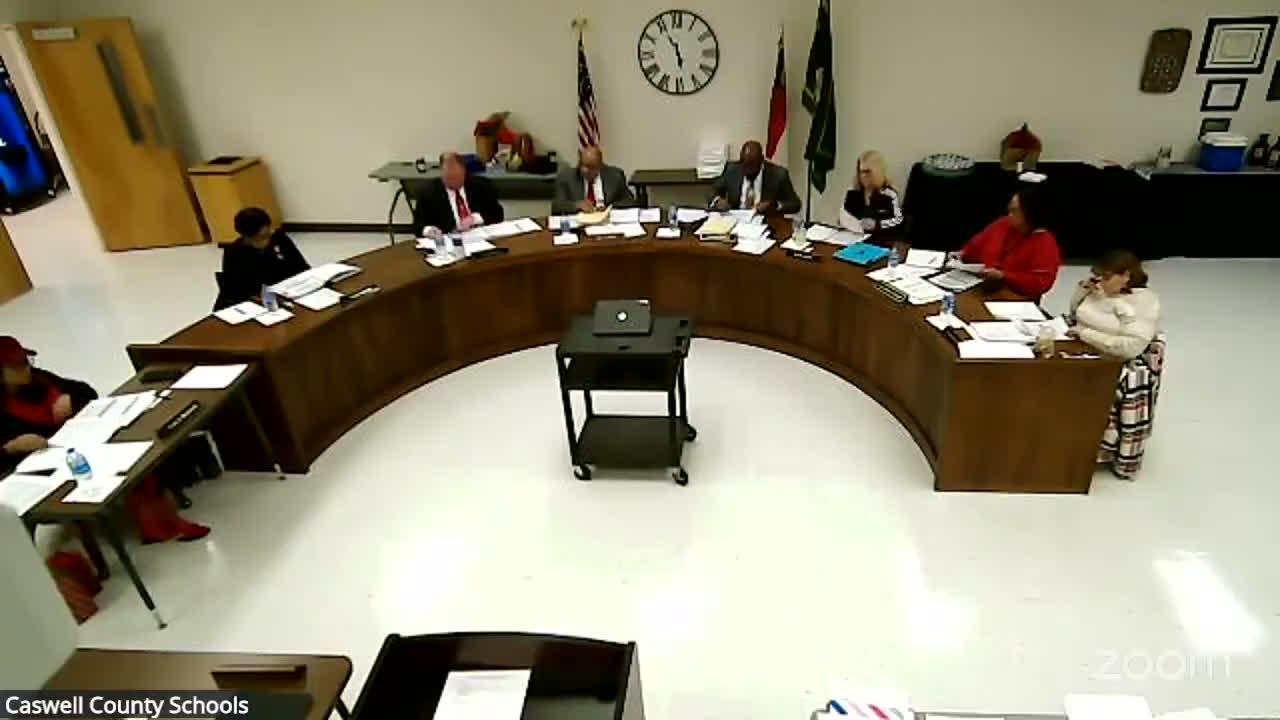
Summary
The Caswell County board reviewed Code E (remote learning) options approved by NCDPI and directed staff to return with elementary, middle and high‑school plans addressing packets, online options, equity and staff expectations; members said remote days should be a last resort and flagged concerns about Internet access and staff workload.
Board members spent substantial time debating the district’s use of Code E remote-learning days after staff reminded the board that the district has approval from the North Carolina Department of Public Instruction to use up to five remote-instruction days.
Board members and staff identified three central concerns: equity of student Internet and device access (particularly at the elementary level), how teachers and hourly staff are expected to work and document instruction during remote days, and the district’s banked instructional hours and calendar implications if more make-up time is required.
Several board members and staff stressed that remote learning should be “a last resort.” Staff recommended that elementary teachers prepare packets for younger students and that middle and high schools use Canvas or other LMS tools when feasible. The board asked staff to draft level-specific remote-day procedures that would specify what instruction looks like for elementary, middle and high schools and how staff hours and pay will be managed — and return those proposals at the next board meeting.
The discussion also covered oversight and evidence of instruction during remote days, the need to avoid inconsistent teacher compliance (board members recounted incidents where teachers had minimal engagement on remote days), and legal/contract implications for classified employees who cannot easily work from home. Staff said the district has banked instructional hours but will need clear plans if additional make-up days become necessary.
The board did not adopt a single new remote-learning policy in public session, but it gave staff clear direction to produce written, level-specific remote‑learning procedures and to clarify how remote days interact with staff compensation and the district calendar.