
Former Westwood Heights coach urges board to follow policy, alleges selective enforcement
Get AI-powered insights, summaries, and transcripts
Subscribe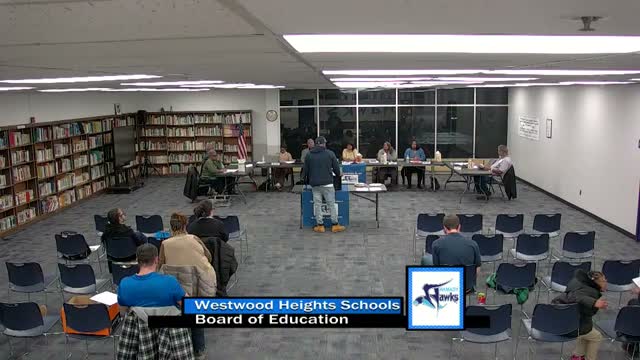
Summary
At a public meeting, Casey Short, who identified himself as the varsity basketball coach, told the Westwood Heights School Board the district failed to follow its own non-conviction and leave procedures and accused administrators of selectively applying policy after parents raised questions; the board took no immediate public action.
Casey Short, who identified himself as the varsity basketball coach, used his public-comment time at the Westwood Heights School Board meeting to say the district had not followed its written procedures before restricting or removing him from coaching duties.
Short told the board the dispute is “not about me, and this is not about basketball. This is about truth, fairness, and example of leadership we set for our students.” He said the district continued to list him publicly as head coach and that he completed required safety courses and coaching certifications while being left without a clear administrative determination.
Short cited the district's non-conviction policy (referred to in his remarks as “policy 4 1 2 1 .01”), saying the policy requires written notice of administrative leave, an individualized review and a documented six-factor analysis before removing an employee who has not been convicted. “All six factors point toward allowing me to work,” Short said, summarizing his view that the nature of the offense, time since the event, participation in a diversion program and his employment record did not justify removal.
Short also said safety concerns were raised only after parents and students went to the board on Nov. 19 and that administrators warned students not to speak publicly. He called the timing “selective enforcement,” saying officials shifted explanations over a nine-month period rather than applying policy consistently.
The board did not provide a substantive public response during the meeting. Board President closed the comment period and adjourned after asking if members had comments; none were offered on the record.
Short asked the board to resolve the matter “fairly and consistent with district policy” and said he may pursue other options if the situation is not remedied. The meeting record shows no immediate board action was taken in response to the comment.
What happens next: The district may consider the comment as part of personnel and policy processes that are generally handled in closed session or through administrative review. No vote or formal direction was recorded on the public record at the meeting’s close.