Get Full Government Meeting Transcripts, Videos, & Alerts Forever!
Get email alerts on the Police Alpr Flock topic
No spam. Unsubscribe anytime.
Watsonville police describe Flock ALPR program, stress privacy safeguards
Summary
Watsonville Police briefed council on Flock automated license‑plate readers, citing investigatory hits and audits while residents asked for written assurances about federal access; police said data deletes after 30 days unless retained for a case and that the system "is not facial recognition."
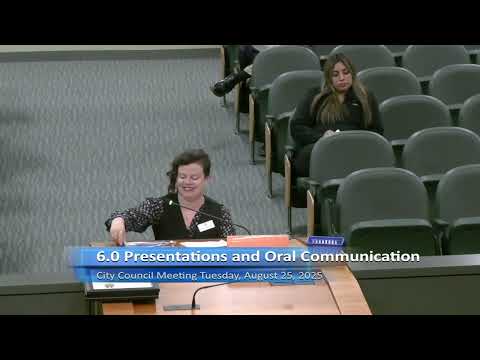
Watsonville police told the City Council on Aug. 26 that their Flock Safety automated license‑plate reader (ALPR) program has aided investigations since it launched locally in 2023, but residents pressed for written limits on sharing data with federal agencies.
"The flock information automatically deletes after 30 days so long as we didn't use it for an investigation," Captain Donnie Thole said. "It is not facial recognition. There is no speed tracking, and it is not used for immigration purposes." He added that the department has activated a transparency portal and that he has conducted two audits this year, finding "0 misuse of the system."
Thole and Assistant Chief David Rodriguez told the council the city currently operates 20 cameras and that officers have used the system 98 times in the past six months. The department described the system as cloud‑hosted and vendor‑maintained; the vendor installs and services the cameras, and police staff log searches tied to case numbers recorded in CAD.
Why it matters: ALPRs are used by many California law‑enforcement agencies and can speed investigations of stolen vehicles and serious crimes by alerting officers when a listed plate appears in the city. At the same time, residents and civil‑liberties advocates nationwide have raised concerns about retention, secondary sharing and potential misuse.
At the meeting, Captain Thole walked the council through two investigative examples in which Flock hits allegedly led officers to locate suspect vehicles and make arrests, including a case in which a suspect armed with a knife was detained after an ALPR hit near Main and Front Streets.
Public concern and staff responses
Several speakers asked whether federal agencies — especially immigration enforcement — could obtain or request Flock data. "If any federal law enforcement agency, particularly ICE, came in and said, 'Hey, we want to use your data,' what would you say?" a council member asked.
"No," Thole replied. "We are bound by local and state laws. It's actually already in our policy — the California Values Act — and the officers are well aware of that." Later he said officers are reminded before searches that they may not use the system for immigration purposes and that audits can be run to ensure compliance.
Antonio Rivas, a member of the public, said he would feel more comfortable if such limits were written into city policy rather than stated orally; Thole responded that the policy already references the California Values Act and that access is auditable.
What's next: Council members asked for continued transparency. Thole said any expansion of camera counts or changes to policy would come back to council, and staff indicated the department will continue posting audit information through the PD transparency portal.
Sources: Presentation and Q&A by Captain Donnie Thole and Assistant Chief David Rodriguez at the Aug. 26 Watsonville City Council meeting.