
Encinitas public-safety commission urges quick action as safe-parking program faces closure
Get AI-powered insights, summaries, and transcripts
Subscribe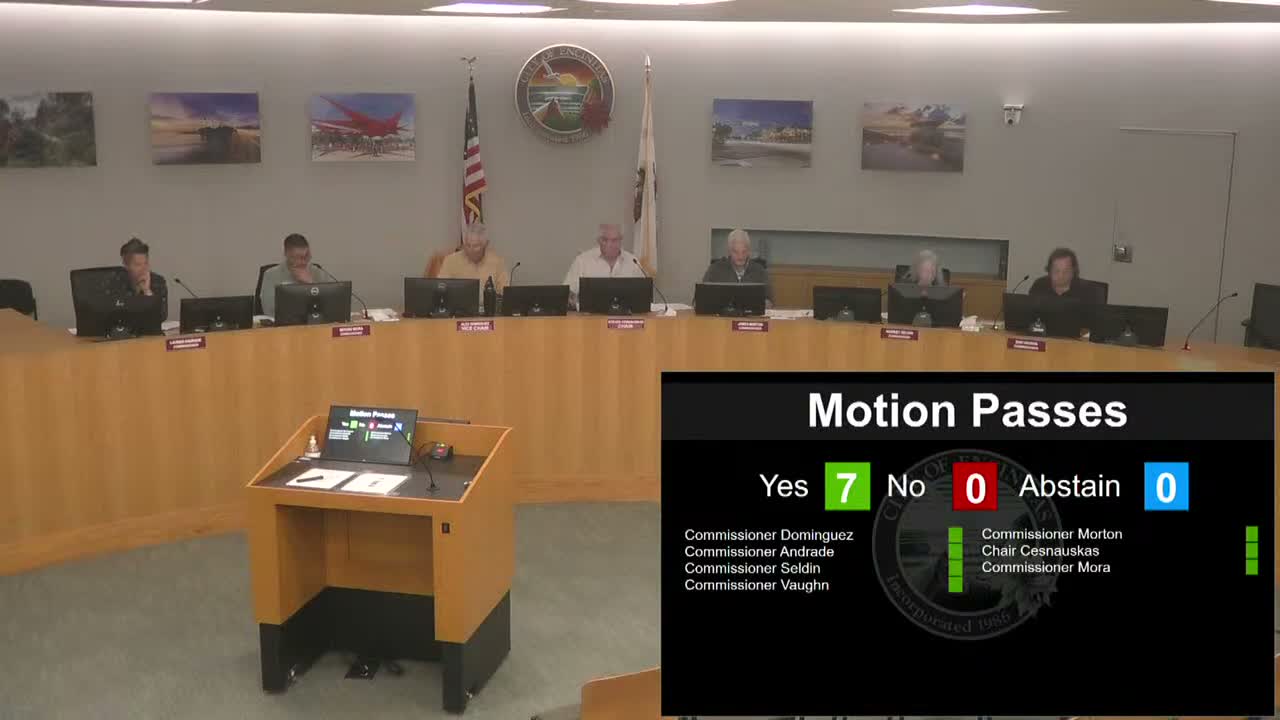
Summary
Commissioners and dozens of public commenters urged City Council and staff to quickly bridge funding and operator gaps before the JFS-run safe parking program ends, pressing for a February public review of the Homeless Action Plan and consideration of temporary funding or proven operators such as Dreams for Change.
Chair Czauskas convened the Encinitas Public Health & Safety Commission meeting, where commissioners, city staff and residents focused on the imminent end of the JFS safe parking program and the commission—s role in advising City Council. Public commenters described the program as the city—s only year-round overnight option for people living in vehicles and said its closure would create a severe service gap for seniors, disabled residents and others in precarious housing.
Ad hoc commissioners Seldin and Vaughn presented the commission—s review of the Homeless Action Plan (HAP) update. They outlined deliverables including a public hearing on the draft HAP, quarterly public reporting of enforcement statistics, ordinance/code review for enforcement enhancements, and continued coordination with regional partners. The presenters said the city recently contracted with the San Diego Rescue Mission for street outreach; they also noted staff site visits to the Buena Creek Navigation Center and quoted the center—s reported "72%" rate of placing people into permanent housing, a figure the commission said it had not verified.
Public testimony underscored urgency. Bob Kent and other speakers asked the commission to support restoring the safe parking program at the community center site, citing site control, case management benefits and an absence of negative incidents. A proxy-read statement from a long-time resident who relied on the safe parking program stressed the need for help applying for permanent housing. Speakers recommended that the city pursue funding and operators with experience, naming Dreams for Change as an example.
Commissioners and staff discussed options and constraints. City council had earlier offered a six-month, $150,000 commitment to JFS while JFS reportedly sought $600,000 for a 12‑month term; commissioners noted that $150,000, by JFS—s figures, would cover about three months of operations. The clerk advised that a formal commission letter to City Council would need to be agendized; several commissioners said they would individually contact councilmembers or speak at an upcoming council meeting to urge quicker action.
The commission voted later in the meeting to add a public review of the HAP draft and an initial presentation of enforcement statistics to the February meeting agenda so commissioners could provide advisory feedback to Council in a timely manner. The commission did not itself appropriate funds; commissioners emphasized their advisory role and asked staff and council for clarification of any funding proposals before sending an official advisory letter.
The commission—s next steps include working with staff to confirm whether the HAP presentation will be available to the commission before or after city council consideration, collecting clarifying funding details, and using the February public review to compile formal advisory recommendations to City Council. Ending the meeting, commissioners reiterated the stated urgency to minimize dislocation for current safe-parking participants.