Get Full Government Meeting Transcripts, Videos, & Alerts Forever!
Get email alerts on the Land Use Subdivision topic
No spam. Unsubscribe anytime.
Planning commission approves 10-acre tentative tract map for 25 single-family lots
Summary
The Lancaster City Planning Commission approved Resolution 25-19 allowing a 10-acre subdivision of 25 single-family R-7,000 lots at the southwest corner of 32nd Street East and Lancaster Boulevard, adopting an IS/MND and mitigation monitoring and reporting program under CEQA.
Nitzy Alvarado, the city’s project planner, told the Lancaster City Planning Commission that tentative tract map 18‑004 (map 82298) would subdivide roughly 10 acres into 25 single-family lots in an R‑7,000 zone at the southwest corner of 32nd Street East and Lancaster Boulevard. She said lot sizes would range from 7,733 to 13,423 square feet and access would be provided from 32nd Street East; new production homes would require a director’s review under condition 24.
Alvarado said staff prepared an initial study and a mitigated negative declaration (IS/MND) and circulated it for a 30‑day public review in accordance with the California Environmental Quality Act. She reported that staff received three response letters, including comments from the California Department of Fish and Wildlife requesting minor wording changes, and that public notices were mailed to owners and occupants within a 500‑foot radius and posted on the property.
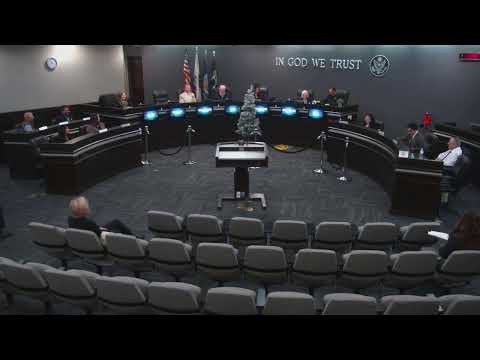
With no members of the public signed up to speak, a commissioner moved to adopt Resolution 25‑19 approving tentative tract map 18‑004, adopting the IS/MND and the mitigation monitoring and reporting program, and authorizing staff to file a Notice of Determination. The motion passed 6–0 with 1 absence.
The commission discussion afterward noted that many tract maps are approved and later wait for market conditions before construction proceeds. The planning commission’s action permits subdivision approvals and environmental clearance but does not itself ensure immediate development or building permits; applicants must pursue subsequent permits to begin construction.