
Yucaipa adopts urgency ordinance to curb dangerous electric motorcycles and e‑bike misuse, raises fines
Get AI-powered insights, summaries, and transcripts
Subscribe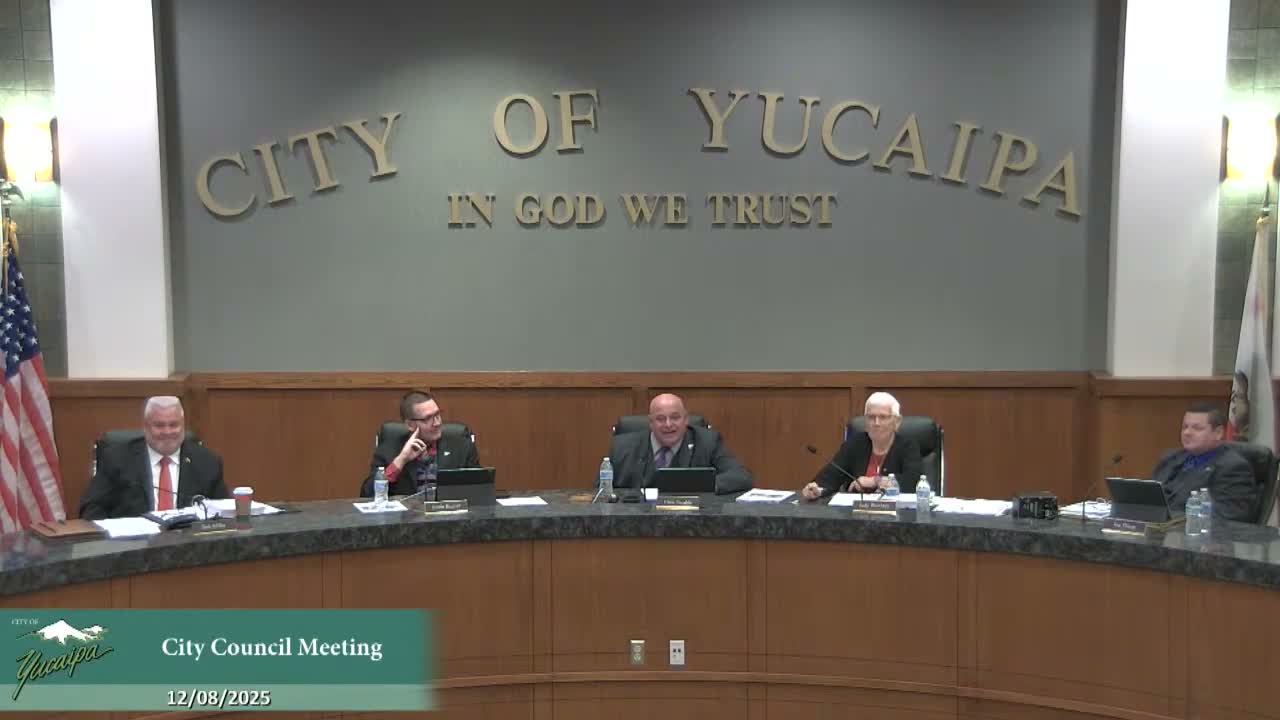
Summary
After extended public comment about high‑speed off‑highway electric motorcycles and unsafe e‑bike behavior, the council adopted urgency ordinance 4-74 U with elevated fines (first-time violation set at $2,000) and directed staff to implement enforcement and education.
The Yucaipa City Council on Dec. 8 adopted an urgency ordinance (4-74 U) aimed at regulating unsafe operation of electric bicycles and off‑highway electric motorcycles on public property and in city parks, and amended the penalties to increase deterrence.
Staff presented a draft ordinance distinguishing Class 1–3 pedal‑assist e‑bikes (which California law treats like bicycles) from high‑powered off‑highway electric motorcycles (referred to in the meeting as SIRONS or similar models) that lack pedals and can reach highway speeds. Trevor Benson (speaker 20) laid out the ordinance’s key components: prohibitions on unsafe operation, location restrictions (sidewalks, park grounds, landscaped areas), single‑file riding, helmet and age clarifications, and a possible urgency adoption to make provisions effective immediately.
The Yucaipa Police Department provided enforcement data from a monthlong review (Nov. 4–Dec. 4): nine riders contacted, nine citations issued, nine impounds or tows, three motorcycles seized, and three vehicle pursuits involving electric motorcycles (one pursuit reached observed speeds of 65 mph). The police representative described a “0 tolerance enforcement strategy” for unlawful, high‑speed electric motorcycles and repeated dangerous conduct.
Council and public comment ranged from calls for strict penalties and parent accountability to concerns about available places for lawful riders and the need for education. Multiple speakers urged fines higher than the standard $100 administrative citation; the city attorney indicated that enhanced fines up to $2,500 per violation are possible under existing code but may require hearing procedures.
Councilmember Miller moved to adopt Ordinance 4-74 as an urgency ordinance and to amend fines with a first‑time violation set at $2,000. The motion was seconded and carried on a roll-call vote (Miller yes, Thorpe yes, Woolsey no, Mayor Pro Tem Bieber yes, Mayor Venable yes). The council directed staff and the police department to follow up with an aggressive public‑education campaign and to provide implementation details, including enforcement plans, cost recovery for abatement, and possible designated riding areas or voluntary registration programs.
The ordinance is effective immediately as an urgency measure; staff will return with implementation specifics and outreach materials.