
San José study: townhomes and stacked-sale projects generally viable; podiums and towers face steep cost barriers
Get AI-powered insights, summaries, and transcripts
Subscribe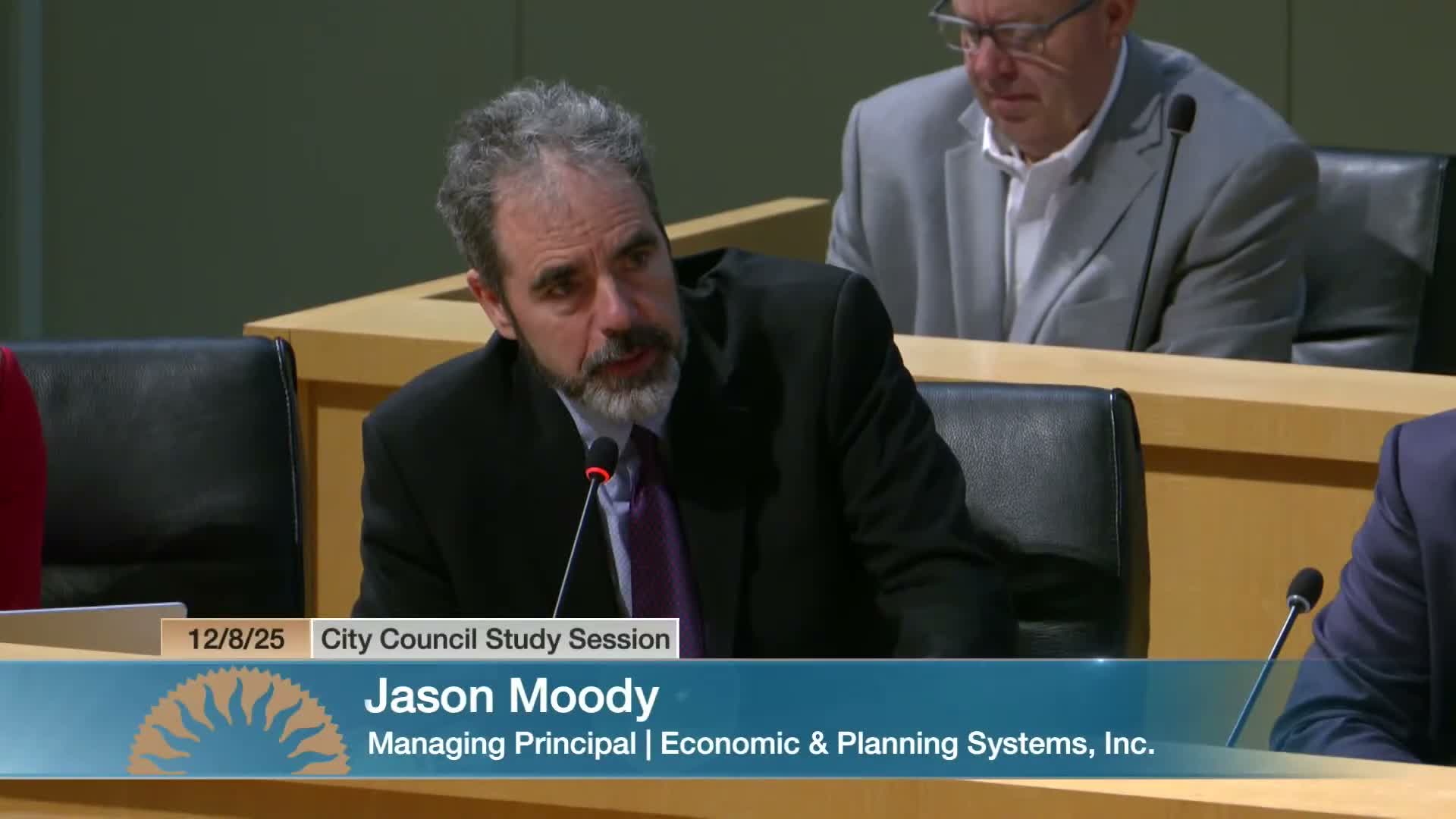
Summary
City staff and consultants told the City Council that market‑rate townhomes and stacked‑flat products are largely feasible today while podiums, wraps and high‑rise towers often return negative land residuals under current rents and costs; targeted fee waivers or rent growth of 5–15% could shift feasibility for some mid‑rise projects.
San José — A city study presented to the San José City Council on Dec. 8 found that several common market‑rate housing types can move forward under current conditions, but higher‑density products face large financial hurdles. Eric Sullivan, San José’s director of housing, introduced analysis by Economic & Planning Systems (EPS) showing that townhomes and stacked‑sale units generally produce positive residual land values, while podium, wrap and tower products often do not.
Jason Moody, managing director at Economic & Planning Systems, said the team modeled five building types on two‑acre example sites across four growth areas and ran sensitivity tests for rents and costs. "Townhomes and stacked‑sale products generally do not need help in this market," Moody said. "By contrast, podiums, wrap/podiums and towers are negative in the marketplace today and could be eligible for fee extensions or other interventions." (Jason Moody, SEG 119–237)
Why it matters: the findings affect how the city targets incentives and fee relief. The consultants found that impact fees and taxes can represent roughly 5–10% of a project’s total cost and that fee waivers or deferrals could make some podium and wrap projects feasible in higher‑rent locations. Moody’s scenario testing suggested that increases in market rents of about 5–15% or comparable cost reductions could flip feasibility for mid‑rise products; towers would generally require much larger shifts.
Key details and limits: the EPS team used a 2024–25 market snapshot and proforma assumptions from third‑party sources and recent local projects. Moody cautioned the models are snapshots and that every project is unique: "Each project will be different given its unique circumstances," he said, noting limitations in data and the need for project‑level analysis. The study assumed a two‑acre comparison to standardize results; several panelists and councilmembers later noted many in‑fill sites in San José are much smaller and said those results may not apply directly to small parcels. (Jason Moody, SEG 119–137; Joss Veros, SEG 1201–1230)
Policy implications: staff and consultants recommended considering targeted fee relief, fee deferrals tied to occupancy, and other programmatic steps to improve feasibility in specific locations. Eric Sullivan told the council the city can act on fees, permits and incentives but has limited control over land and market rents, which are big drivers of viability.
Next steps: staff said a series of policy initiatives, including updates to the inclusionary housing ordinance and multifamily incentives, will be presented Jan. 27; further briefings to Planning Commission and council are planned in spring and summer. The study session was informational; no votes or formal actions were taken.