Get Full Government Meeting Transcripts, Videos, & Alerts Forever!
Get email alerts on the Tenant Protections topic
No spam. Unsubscribe anytime.
San Mateo introduces tenant‑protection ordinances, expands rental‑assistance outreach
Summary
City staff presented two ordinances to extend AB 1482 relocation provisions locally and to strengthen tenant‑relocation benefits; council introduced the ordinances unanimously and directed staff to pursue voluntary rental‑property data collection and continued outreach to expand rental assistance.
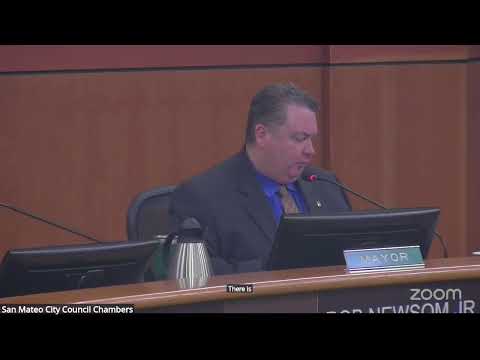
San Mateo — The City Council on Nov. 17 voted unanimously to introduce two ordinances aimed at advancing tenant protections under the housing element and a related implementation timeline.
Housing manager Rachel Horst told the council staff’s proposed ordinance would add Chapter 10.1 to the San Mateo Municipal Code to incorporate Civil Code §1946.2 by reference (implementing AB 1482) and extend relocation assistance eligibility to tenants with tenure of 11 months or longer for no‑fault evictions. Horst said the ordinance also requires landlords to notify tenants when substantial remodels are complete so displaced tenants know a unit is again available; staff clarified the notification is not a guaranteed right to return at the prior rent.
The council also reviewed proposed amendments to Chapter 7.5 that govern tenant relocation benefits when units become uninhabitable due to code enforcement. Eugene Albert, the city’s code‑enforcement manager, described three proposed changes: (1) move appeal hearings from council to a hearing officer, (2) give staff discretion to designate temporary relocations as permanent when objective conditions warrant it, and (3) change the cap on temporary relocation payments from HUD fair‑market rent to a general‑services per‑diem rate to allow higher maximum payments when supported by receipts.
On program details, Horst said the city launched an emergency rental‑assistance program on Aug. 1 administered by Samaritan House with $150,000 set aside (including $18,000 for administration). "So far, we know that $23,850 have been spent from this fund, and that served 12 households," Horst said during the presentation. Staff recommended introducing the ordinances with a technical citation correction and returning for a second reading on Dec. 1; ordinances would become effective 30 days after adoption if approved at second reading. The tenant‑notification requirement in the ordinance would trigger by Feb. 1, 2026.
Council members asked staff about outreach and whether to increase the rental‑assistance allocation; several members supported exploring raising the fund from $150,000 to $200,000. Staff also said it could pursue voluntary collection of rental‑property data through the business‑license (HDL) platform but that mandatory data collection would likely require a new ordinance and an estimated 4–6 months to implement any voluntary business‑license questions.
The council moved, seconded and voted 5‑0 to introduce the two ordinances, find them exempt from further environmental review under CEQA Section 15061(b)(3), and direct staff to pursue voluntary rental‑property data collection via business‑license filings. Staff will return with implementation details and additional technical responses to questions raised by stakeholders.