Lifetime Citizen Portal Access — AI Briefings, Alerts & Unlimited Follows
Beatrice council adopts 2026 one-and-six year road and street plan after state highway debate
Loading...
Summary
The Beatrice City Council voted 7-0 to adopt its 2026 one-and-six year road and street plan after staff described a $27 million estimated repair backlog and detailed year-one projects, including a state-funded mill-and-overlay of U.S. Highway 136.
The Beatrice City Council voted 7-0 on Nov. 20 to adopt the city's 2026 one'and'six year road and street plan following a public hearing and a staff presentation on pavement priorities and funding.
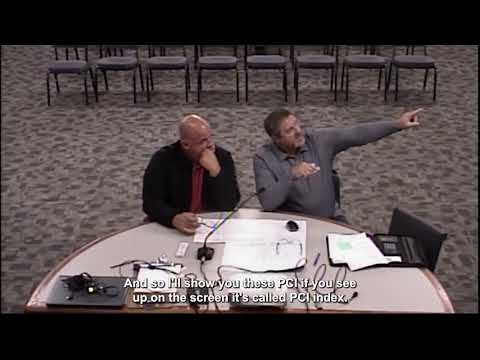
City staff presenter (identified in the transcript as Speaker 9) told the council the plan is required by Nebraska and is used to demonstrate how the city will use highway allocation funds, which come from motor fuel taxes, vehicle registration fees, sales taxes and other state sources. Speaker 9 said the city used a pavement-condition tool called StreetLogix to produce PCI (pavement-condition index) ratings and to prioritize streets for maintenance.
Why it matters: Speaker 9 said the city is coping with an estimated $27,000,000 backlog of needed repairs while receiving roughly $1,800,000 a year from the state'allocated share. That gap, staff said, constrains how many projects can be completed in a given year and shapes choices about which streets to repair or seal.
Key projects and costs: The plan lists a state'funded mill-and-overlay of U.S. Highway 136 from 1st to about 24th Street, estimated at about $2.3 million and paid for entirely by the state; an Ella Street concrete reconstruction project (2nd to 3rd Street) with approved bids of about $426,609 and an additional $18,000 for plantings; reconstruction of 7th Street (Arthur to Monroe); and a Jefferson Street project to open additional development lots in the Hannibal View area. Speaker 9 described year-one armor coating and asphalt sealing budgets (roughly $32,500 each) and estimated total year-one project funding at about $5.1 million when city and state sources are combined.
Debate over Highway 77 configuration: The council discussed a separate, state-led mill-and-overlay project for U.S. Highway 77 slated for year two. Staff warned that the state will design and stripe the corridor and could choose to stripe four lanes or three. Speaker 9 said the current traffic pattern "functions as a three lane," adding that a three-lane configuration could improve safety at left-turn movements. Council members and business representatives expressed concern about the stripe change and potential costs: one council member and business stakeholders said leaving the road as four lanes could require the city to spend millions more to preserve that configuration. "If they stripe it as four lanes, we could be on the hook for $6,000,000," one council member said in debate, while another stressed safety and the possibility of saving lives as part of the decision calculus.
Maintenance approach: Staff explained deterioration curves used to predict pavement life (concrete: roughly 30'40 years; asphalt: about 20 years) and said surface treatments such as armor coating typically extend usable life by about five years. Speaker 9 noted that PCI tools guide but do not replace field inspection and collaboration between analytical staff and street crews.
Outcome and next steps: After closing the public hearing, the council adopted Resolution No. 7669 to approve the 2026 one'and'six year road and street plan, 7-0. Staff said updated PCI runs from StreetLogix are expected in about 60 days and could prompt adjustments to projects listed for years two and beyond. The council will monitor state schedules for highway projects and available grant opportunities that could move projects forward earlier than shown in the plan.
The adoption followed a public hearing and staff presentation; no formal amendments to the plan were made at the meeting.