Get Full Government Meeting Transcripts, Videos, & Alerts Forever!
Get email alerts on the Bond And Long Range Plan topic
No spam. Unsubscribe anytime.
School board narrows bond approach to two questions after survey; district sets $1.75M savings target
Summary
Board members discussed an $89.5 million long-range facilities plan and a two-question bond strategy aimed at increasing voter support, citing survey results and price sensitivity; the board also unanimously approved a $1.75 million district savings target to guide staffing and operational adjustments.
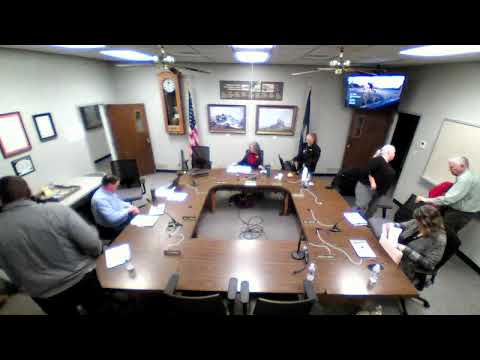
The board of education met in a special session to continue a months‑long discussion about a proposed long‑range facilities plan and how to present it to voters. Members and district staff focused on whether to split the proposal into two ballot questions to improve the odds of passing key elements of the plan.
Superintendent (Speaker 4) said the long‑range plan reflects hundreds of community participants and that it aims to address secondary and elementary needs while emphasizing safety and longevity of facilities. Consultant Speaker 6 summarized survey results, telling the board the community is ‘‘price sensitive’’ and that support rises meaningfully as the estimated household impact falls. Speaker 6 said a plan at roughly $89.5 million would translate to ‘‘about $9.10 a month for the median homeowner,’’ and argued separating the work into a no‑mill‑levy first question and a second question for additional scope would give the district a better chance of winning voter approval.
Several board members pressed on which items should appear on each question. Some urged that the no‑mill‑levy question focus on the high‑school work combined with safety and secure entrances at elementaries, while moving athletics and other larger items to a second question. Others warned that changes such as redistricting and potential staff reassignments could inflame community emotions and undermine a second question if it appears to force school closures.
Board members identified information they wanted before finalizing ballot language: concise ties between each proposed question and the community feedback that produced it, updated capacity and classroom counts for each elementary, and a high‑level contingency plan showing how programs and pre‑K services would be handled if voters reject part of the two‑question package.
On staffing and operational planning, the board voted to set a district savings target of $1,750,000 to guide adjustments during the 2026–27 school‑year transition. Speaker 9 moved the measure and Speaker 8 seconded; the motion passed on a unanimous voice vote reported as 7–0.
The superintendent and consultants said a legal resolution must be adopted by Dec. 11 to meet ballot timelines and that district staff would prepare high‑level ballot language and an informational campaign for the board to review at its scheduled Dec. 8 work session.
The board did not finalize ballot wording at the special meeting and asked staff to return with the requested materials and with a plan for public messaging that clearly explains the purpose and expected outcomes of each question.