Get Full Government Meeting Transcripts, Videos, & Alerts Forever!
Get email alerts on the Municipal Budget topic
No spam. Unsubscribe anytime.
Athens council adopts emergency ordinance to move funds and shore up medical and general funds
Summary
Council suspended the rules and adopted Ordinance 1 38‑25 to authorize interfund transfers tied to 2025 appropriations, a measure proponents said was needed to address rising medical bills; council accepted the ordinance by voice vote.
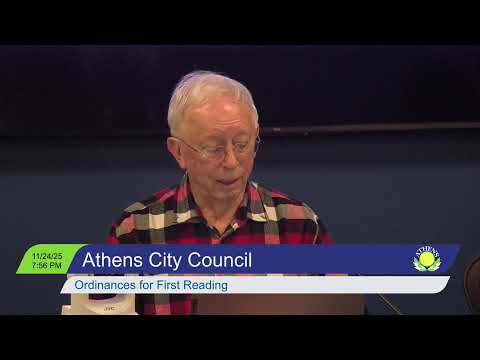
Athens City Council on Monday held a special session and adopted Ordinance 1 38‑25 to amend the 2025 appropriation and authorize interfund transfers intended to restore the general fund and address unexpectedly high medical costs.
President Pro Tem Tim Reisner moved to suspend the rules, citing urgency, and the council approved the suspension by voice vote. Reisner then moved to adopt Ordinance 1 38‑25; a voice vote followed and the chair declared the ordinance passed.
The ordinance formalizes transfers discussed earlier in the Finance & Personnel committee to correct an emergency draw on the general fund used to pay medical claims. Auditor Kathy Hecht told council the city previously moved money from the general fund to keep the medical fund solvent; staff then recalculated department shares and proposed transferring approximately $310,061 back into the general fund so the proprietary funds properly bear their share of medical costs.
"We're down to about 5.8% right now," Auditor Hecht said of the general fund reserve while explaining the city’s target reserve policy is 7.5%–15%. Council members said the proposed transfers were structured to spread the medical cost burden fairly among departments and acknowledged the urgency of the timing.
Why it matters: City officials said the transfers are meant to prevent deeper reserve depletion and to align charges with the departments that employ covered personnel. The ordinance was advanced under suspension of rules because staff said the funds needed to move immediately.
Council handled the motions and votes by voice; no roll‑call tallies were recorded in the committee or special session minutes included in the transcript. The ordinance was read during the special session and the chair announced the measure had passed. The council adjourned shortly afterward.