Get Full Government Meeting Transcripts, Videos, & Alerts Forever!
Get email alerts on the Labor History topic
No spam. Unsubscribe anytime.
Snake Hollow riot and the Hocking Valley strike: a contemporaneous newspaper record
Summary
A public lecture reconstructing the Aug. 31–Sept. 1, 1884 Snake Hollow Mine Riot and its place in the nine-month Hocking Valley coal strike, drawing on digitized 19th-century newspapers to detail attacks, casualties, militia deployment and the strike's aftermath.
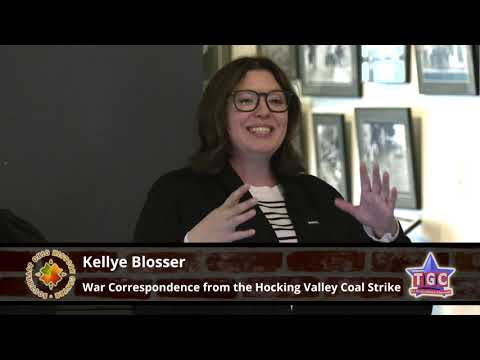
An unnamed presenter at a public lecture in Athens summarized contemporary newspaper coverage of the Hocking Valley coal strike and the Snake Hollow Mine Riot, focusing on events of Aug. 31–Sept. 1, 1884. The talk draws on the Library of Congress Chronicling America archive to recover dispatches, eyewitness accounts and press reactions from across the United States.
The presenter described how the strike began in June 1884 after mine operators organized as a syndicate announced a wage cut from 70¢ to 50¢ per ton and required an 'ironclad' contract that forbade union activity. According to the presenter, contemporaneous reporting emphasized the economic squeeze: newspapers and a later inflation-adjusted calculation put an affected miner's annual equivalent income at roughly $11,100 falling to $7,400, and closer to $6,200 after miners' out-of-pocket expenses—figures the presenter used to explain why miners resisted the terms.
The lecture reconstructs the night attack at Snake Hollow in the early hours of Aug. 31, 1884. Telegrams and dispatches reported telegraph lines cut and early exaggerated participant counts; newspapers initially said as many as 3,000 rioters, but the presenter noted eyewitness Barney Donnelly later described a force of roughly 75 people. At Snake Hollow a guard from Logan commonly identified in the press as William Hare was killed and two other guards wounded. The presenter emphasized that contemporary press accounts sometimes mis-transcribed names and that local reports provided more restrained casualty and participant estimates than national dispatches.
The presenter outlined coordinated incidents across the valley: a reported arson at the hopper of Mine No. 7 in New Straitsville around 3 a.m., attacks at Longstreth and Sand Run, and multiple sites where guards and Pinkerton or company-affiliated forces were outnumbered. An earlier July 13 train was cited as a flashpoint when 33 Pinkerton guards and dozens of imported workers were brought into the valley, intensifying tensions.
Local law enforcement response featured in the account: Hawkin County Sheriff T.F. McCarthy reached a working telegraph in Buchtel and wired Governor George Hoadley, reporting gunfire and guard casualties. The presenter described Hoadley’s initial reluctance to send state troops, instructing local authorities to exhaust every means first; after further reports, the governor ordered militia companies (including the fourteenth regiment and several named companies) into the valley and toured mining communities to hear miners’ representatives.
The presenter also highlighted noncombatant casualties and contested incidents. Telegraph operator William Collison was reported shot by a guard who mistook him for an arsonist while guarding a hopper; German-language and English-language papers both treated the event as lamentable. The presenter said David Woody was arrested after being seen with bullet holes in his hat, but later discharged amid allegations that private detectives coerced a confession and denied him access to counsel.
On the strike’s conclusion, the presenter argued the effective end came on Feb. 1 when the Ohio Miners Amalgamated Association announced a statewide 10¢ wage reduction, which reduced financial support for strikers and prompted many to return to work at the lower rate. The presenter framed the strike as historically significant for spurring later legislation (including laws restricting company scrip) and contributing to the organizational trajectory that strengthened miners’ unions nationally.
The presenter repeatedly cautioned about newspaper exaggeration, telegraph disruptions and transcription errors in contemporaneous accounts, and said their ongoing project is assembling a master timeline and cross-checking eyewitness statements and national dispatches to clarify conflicting reports.
The lecture offered this slice of research as part of a broader effort to recover day-to-day experience of the strike, and the presenter said the full timeline and source set will be made available as their work progresses.