
Westland council approves $1.9 million lease-to-own radio system for police and fire
Get AI-powered insights, summaries, and transcripts
Subscribe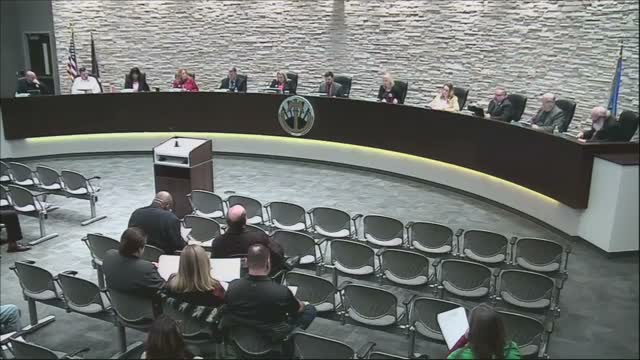
Summary
The Westland City Council approved a lease-to-own agreement with Motorola Solutions to replace all police and fire radios, a package officials said will cost about $1.9 million, last at least 2025 years and defer first payments until Jan. 1, 2027.
The Westland City Council on a unanimous vote approved a purchase agreement with Motorola Solutions to replace all vehicle-mounted and portable radios used by the police and fire departments.
Chief Stamper told the council the current radios are obsolete, parts are no longer available and federal encryption standards require updated equipment. Lieutenant Sleep, who led much of the procurement work, said the vendor and staff expect the new radios to remain operational for about 20 to 25 years.
Council members pressed staff on price, funding and timing. In discussion the chief and lieutenant described the arrangement as a lease-to-own financing structure that spreads payments over several years; the contract was presented with a total cost discussed in the meeting of about $1,900,000 and a seven-year payment/warranty term tied to the financing. Councilmembers were told the first payment under the vendors payment schedule is not due until Jan. 1, 2027, meaning the annual appropriation would fall into next years budget cycle.
Lieutenant Sleep said Motorolas programming, equipment and encryption work are included in the vendor agreement, but the initial activation cost imposed by the state radio system (MPSCS) is a separate expense and not included in this contract. The chief said the city had pursued grants for multiple years, both independently and as part of a regional application, but was unsuccessful; combining police and fire purchases produced roughly 40% savings versus separate buys, staff said.
Council members asked about lifecycle and spare units. Lieutenant Sleep said the purchase is "holistic" and includes extra units for new hires and replacements, docks, batteries and other required accessories. He added the units will include GPS positioning to allow command staff to track personnel locations during incidents.
Council President McDermott and other members expressed support for the investment as a public-safety priority. The motion to approve the agreement was moved and supported as shown in the meeting record and passed without dissent.
Next steps: staff will complete contract paperwork and, according to testimony, coordinate activation with the state system (MPSCS); the state activation cost remains a separate budget item to be addressed during implementation.