Get Full Government Meeting Transcripts, Videos, & Alerts Forever!
Get email alerts on the Employee Benefits topic
No spam. Unsubscribe anytime.
Haslet council opts to absorb 25% premium rise, declines $400 dependent stipend
Summary
After debating projections and budget impacts, the Haslet City Council voted to absorb a 25% health-insurance premium increase for staff and declined a separate $400-per-month dependent stipend, citing recurring cost concerns and limited ability to target benefits to some employees.
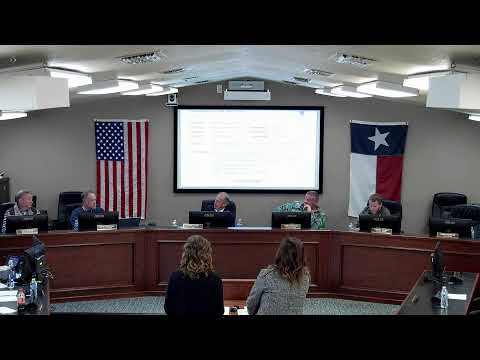
HASLET — The Haslet City Council on Monday voted to accept staff’s recommendation to absorb a 25% increase in employee health-insurance premiums and to not provide an additional $400-per-month city contribution for dependent coverage.
The council’s action followed a lengthy discussion about how the budget presentation handled revenue projections and recurring costs. One council participant (Speaker 1) called the graphs “misleading” and pressed staff for clarity on whether the packet assumed flat revenues or projected continued growth. “If our past is showing an increase, why is it only for the purpose of this graph that we’re all of a sudden not gonna show an increase continuing for the revenue?” the speaker said during discussion.
Staff members, identified in the meeting as presenters, said the packet intentionally kept non-insurance revenues flat to isolate the financial effect of health-insurance changes. “What the graphs depict is today’s dollars, keeping all things equal and adding a planned reoccurring cost,” one presenter (Speaker 3) told the council, noting accounting rules require identified recurring expenditures to be shown in the budget.
Council members debated whether the council should instead add a $400 monthly city contribution for dependent coverage for affected employees (the packet cited 13 employees for that option). Staff reviewed exhibits showing administration-line expenditures and the incremental cost of adding the $400 contribution; one exhibit listed an administration base near $717,244 and a later administration figure of about $888,000, a difference staff cited as roughly $171,000 for the 2025–26 year in that line item. A separate figure cited by staff for dependent-coverage contributions appeared in discussion as $1,403,000 in presentation context; staff characterized several numbers as different ways of illustrating recurring and cumulative costs.
Supporters of the staff recommendation said the city has already absorbed a substantial increase and that doubling contributions (absorbing the 25% and adding the $400 stipend) would materially raise recurring costs. “If we absorb the 25% and the $400, it’s doubling the amount of money,” one council member (Speaker 6) said during debate.
Opponents argued the decision leaves some employees without additional dependent coverage assistance. One council member pressed the consequences: “So pretty much, we’re not helping out any of our employees… I feel like we’ve done our employees in the city a disservice,” (Speaker 4).
The motion, moved by Speaker 6 and seconded by Speaker 5, passed after a voice vote; the meeting transcript records one opposition and the motion carried. The council’s motion directed staff to proceed with enrollment under the current plan structure and to maintain the previously approved 25% absorption of premium increases rather than adding the separate dependent stipend.
Council members and staff also noted a broader follow-up: several speakers said the city should revisit plan design and carrier options in next year’s budget-workshop cycle to seek longer-term savings and alternatives, including examining plan tiers (gold/platinum/silver/bronze) and the carrier-shopping timeline.
The council adjourned at 8:08 p.m. and directed staff to proceed with enrollment timing so benefits administration could continue on schedule.