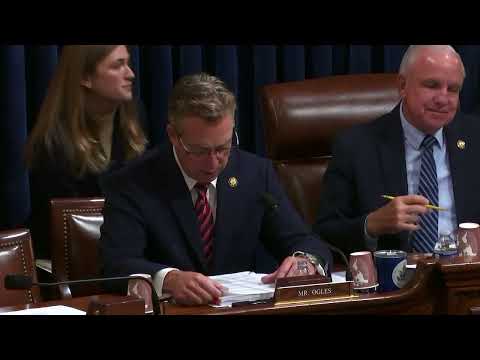
House Homeland Security hearing urges a national strategy to defend subsea cables from foreign threats
Loading...
Summary
Witnesses at a joint House Homeland Security hearing warned that China, Russia and other actors pose a growing risk to subsea telecommunications cables and urged Congress to designate a single federal lead, streamline permitting, expand U.S. repair capacity and raise penalties to deter sabotage.
Experts told a joint House Homeland Security hearing on subsea telecommunications cables that the U.S. lacks a unified federal strategy to deter, attribute and respond to attacks on the undersea network that carries the vast majority of global communications.
Dr. Matthew Kroenig, vice president and senior director at the Atlantic Council's Scowcroft Center and a Georgetown professor, framed the risk as geopolitical and urgent: “China and Russia's threats to subsea cables present a serious challenge to the global communications and energy systems that underpin U.S. and allied security, prosperity, and way of life,” he said, calling for a three‑pillar approach of resilience, monitoring and accountability.
The hearing highlighted the scale of the infrastructure involved and the asymmetric vulnerabilities it creates for national security. Tim Strong, chief research officer at Telegeography, summarized the technical problem: “They are vulnerable, they are critical, and they are irreplaceable,” adding that operators already face roughly 200 faults per year and industry investment has driven mitigation measures such as burial, armoring and a fleet of repair vessels.
Witnesses and lawmakers identified four near‑term policy priorities. First, several witnesses recommended designating a single federal coordinator — most commonly the Department of Homeland Security — to shepherd industry‑government cooperation, centralize threat information, and expedite interagency permitting. “We need one federal lead with a dual mandate to shepherd new cable projects through the permitting maze and to build a coherent national strategy for resilience,” Strong testified.
Second, members and witnesses singled out permitting delays and opaque interagency review (often referred to in testimony as the ‘Team Telecom’ process) as a deterrent to investing in U.S.‑connected capacity. Panelists described examples in which approvals stretched from months to multiple years and urged congressional action to streamline review while preserving security vetting.
Third, the committee discussed glaring repair‑capacity shortfalls. Witnesses cited roughly 80 specialized repair ships servicing nearly a million miles of cable and urged expanding U.S. shipbuilding and proposals such as the Neptune Act to add repair vessels. Witnesses and members said faster repair capability and redundancy — more diverse cable routes and additional landing points — are essential to reduce the incentives for sabotage.
Fourth, legal and economic deterrents drew attention. Kevin Frazier, AI innovation and law fellow at the University of Texas School of Law, urged Congress to update the Submarine Cable Act of 1888 and related penalties that witnesses characterized as out of date, and suggested conditioning future landing or licensing approvals on adoption of modern sensing technologies or fees to fund monitoring and enforcement.
Committee members also pressed witnesses on attribution and international cooperation after recent disruptions in the Baltic Sea and near Taiwan. Witnesses urged stronger two‑way intelligence sharing between industry and government, improved investigative capacity for distinguishing accidents from deliberate cuts, and diplomatic initiatives to reduce foreign permitting red tape that can delay repairs abroad.
Lawmakers on both sides of the aisle acknowledged the technical complexity and agreed the issue requires bipartisan attention. No legislation or vote was taken during the hearing; members said the session was intended to gather expertise to inform policy options, including potential DHS authorities, permitting reforms, investment in U.S. repair capacity, and statutory updates to raise penalties and support enforcement.
The committee is expected to use the testimony to craft follow‑up legislation and oversight; witnesses recommended concrete next steps such as a DHS‑led supply chain mapping, a two‑way threat intelligence mechanism with cleared personnel where appropriate, funding for repair‑ship procurement, and statutory updates to ensure penalties and licensing standards reflect the strategic value of subsea cables.