Get Full Government Meeting Transcripts, Videos, & Alerts Forever!
Get email alerts on the Workers Compensation Exclusivity topic
No spam. Unsubscribe anytime.
Tennessee Supreme Court hears arguments on whether Bridgestone is shielded by workers’ compensation exclusivity in fatal mold-repair accident
Summary
At a December Scales session at Bryan College, the Tennessee Supreme court heard opposing arguments over whether Bridgestone Americas should be treated as a "statutory employer"—which would bar this wrongful-death suit under Tenn. Code Ann. §50-6-108—or whether disputed facts about control and specialized mold repair require a jury on the premises-liability claim.
The Tennessee Supreme Court on a December 2025 Scales session at Bryan College heard appellate argument over whether Bridgestone Americas Tire Operations LLC is entitled to immunity from this wrongful-death suit under Tennessee’s workers’ compensation exclusivity rule.
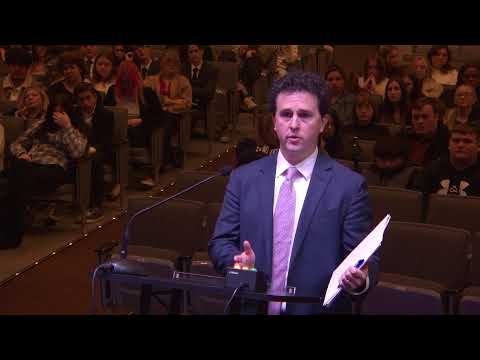
Bridgestone’s attorney, Isaac Sanders, told the court the facts are undisputed and that Bridgestone should be treated as a statutory employer under Tennessee Code Annotated §50-6-108, which would bar the family of Beau Christopher Lowe from pursuing tort claims. Sanders summarized that Lowe, an employee of Cumberland Machine Company (an independent contractor), was drilling vent holes in a tire mold plate when the plate fell and killed him. Sanders said three of the four Lindsey factors are present and that precedent applying the “regular business” test supports resolving the case by summary judgment.
“Every additional fact that the plaintiffs have pointed to … is something additional that has not been required or even discussed in most cases,” Sanders said, arguing the record shows mold maintenance and vent-hole drilling are regular, integral parts of Bridgestone’s tire-manufacturing process.
Plaintiffs’ counsel, Drew Salters, representing Lowe’s surviving spouse and two minor children, said the death was preventable and stressed that Bridgestone admitted it did not control Lowe’s conduct. Salters argued the third-party remedy in Tenn. Code Ann. §50-6-112 and the independent-contractor exception to premises liability described in Blair v. Campbell apply because mold repair is a specialized millwright function Bridgestone does not routinely perform.
“If mold repair were to go defunct as an industry, Bridgestone would continue making tires,” Salters said, urging the court that mold repair is not part of Bridgestone’s regular business and that multiple factual disputes (he cited 13 depositions and a lengthy statement of disputed facts) should preclude summary judgment.
Justices pressed both sides on whether the particular task Lowe performed that morning—described by several witnesses and Bridgestone’s investigation as vent-hole drilling—was materially different from routine cleaning tasks performed by Bridgestone employees, and whether those differences (methods, equipment and the specialized skill of a millwright) are sufficient to create genuine disputes of material fact. Several justices noted the trial court and the court of appeals both denied summary judgment, saying there were genuine issues of material fact, but did not specify those issues in detail.
Sanders pointed to testimony from Mark Browning and two Cumberland witnesses and to the contract language requiring Cumberland to carry workers’ compensation insurance as support for Bridgestone’s position that the exclusivity defense applies. Salters countered that Bridgestone provided rigging and would have assumed duties tied to safe performance of the work, pointing to evidence he described as showing a rigging failure caused the mold to fall.
Counsel agreed that if the court finds no material factual disputes on the statutory-employer or premises-liability analyses, the appropriate remedy would be summary judgment for the party whose legal interpretation the court adopts; if material disputes exist the case would proceed to jury fact-finding.
The court did not announce a ruling. After argument, justices invited student questions as part of the Scales program and adjourned the session. No decision or vote was issued from the bench during the session.