
Bakersfield planning panel denies application to convert house into 12‑bed elderly care home
Get AI-powered insights, summaries, and transcripts
Subscribe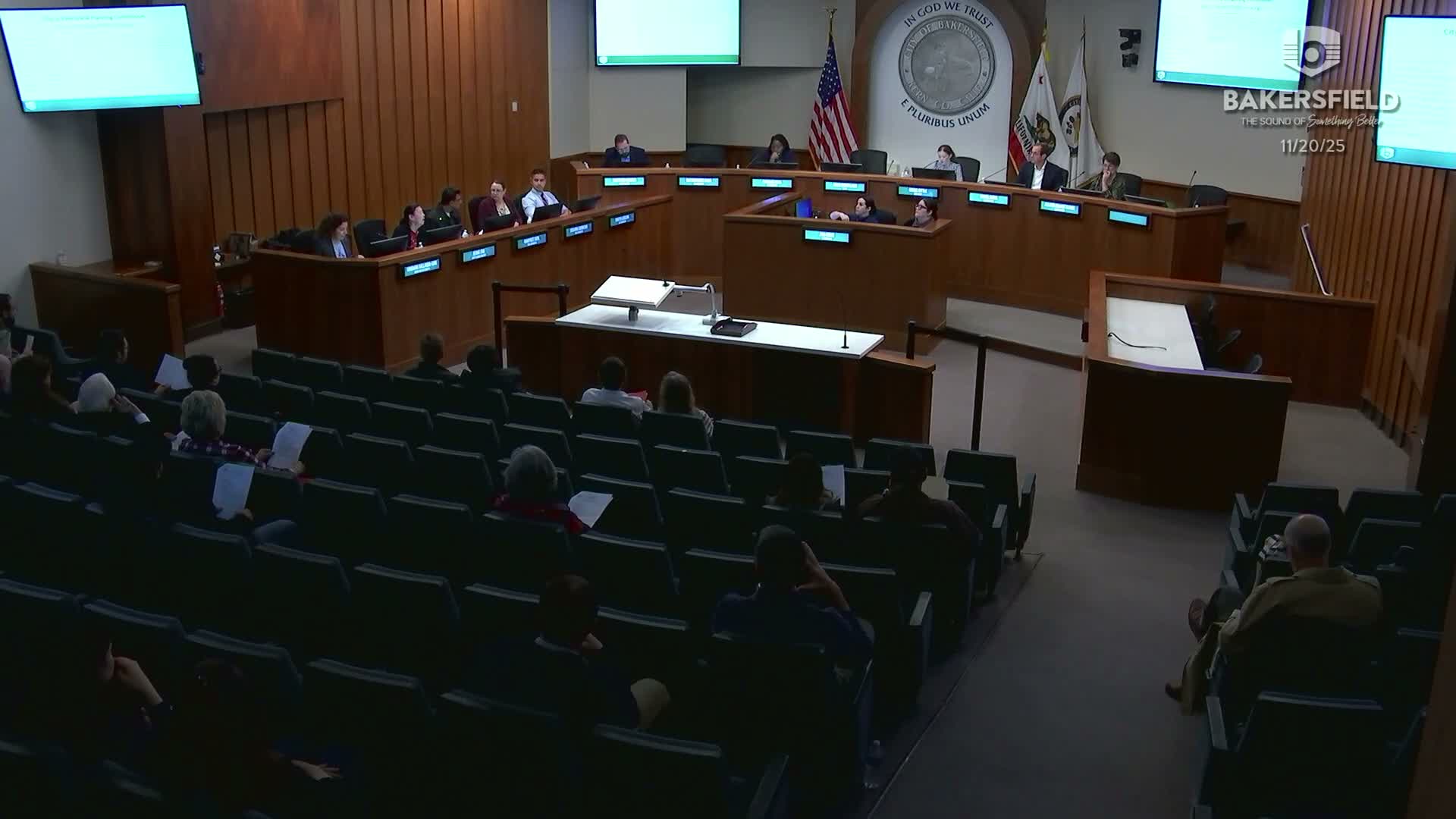
Summary
After hours of testimony from neighbors and detailed questioning of the applicants and staff, the Bakersfield Planning Commission voted to deny a conditional use permit to convert 12411 Riverfront Park Drive into a 12‑bed residential care facility for the elderly (CUP 25‑0023).
The Bakersfield Planning Commission on Nov. 20 denied an application from JNS Health Systems LLC to convert a single‑family house at 12411 Riverfront Park Drive into a 12‑bed residential care facility for the elderly (CUP 25‑0023).
Planner Yazid Alugheri told commissioners the proposal would convert a 3,262‑square‑foot house on about 0.24 acres into a licensed residential care facility for the elderly, and that staff recommended approval after reviewing the Metropolitan Bakersfield General Plan and the municipal code. The application drew 11 written opposition comments and a large turnout of neighbors who spoke at the hearing.
The project’s applicant, Jenny Bridal, said the facility would provide affordable, personalized care with 24/7 supervision and on‑site services such as chef‑prepared meals and raised garden beds. Bridal said most residents would be homebound and would not drive, and described steps the operator would take to minimize neighborhood disruption. "We believe we can best serve the community with a residential care home where we can provide affordable and personalized care," Bridal said.
Neighbors responding at the microphone urged the commission to deny the permit. Virgil Miller, who submitted a petition opposing the project, said the neighborhood objected to scale, traffic, parking, noise and loss of single‑family character. "I strongly urge you to deny this conditional use permit number 25‑0023," Miller said. Other residents described repeated traffic and emergency‑service calls at an existing nearby facility and said converting garage doors to windows would change the block’s appearance.
Commissioners pressed applicants and staff about several technical and operational issues: whether the facility would meet building and fire codes, the number of staff on duty at peak occupancy, how the backyard and sunroom would be used, and whether the city or state licensing would treat the proposed use as over‑concentration. Staff said building plans had not yet been submitted but that the project would be required to meet building and fire codes. Staff also noted the city’s zoning allows community care homes as a by‑right use at six residents or fewer, while seven or more residents require a conditional use permit.
A recurring point in testimony and commissioner discussion was the 300‑foot spacing requirement that appears in state Department of Social Services reviews for certain facility types. Neighbors argued the proposed facility could be closer than 300 feet to other licensed sites; staff said it had not received a state letter objecting on that basis and explained that the adjacent three‑bed facility is licensed through the state and is a different classification (an adult residential facility) than the proposed RCFE.
Applicants’ counsel Robert Kush emphasized the local need for affordable eldercare and said the principal operational impact would be staff trips, not resident driving. "I think we can all agree that this community needs elderly housing," Kush said. Supporters who spoke described positive experiences with small residential care homes and argued that such facilities can be quieter and less disruptive than opponents feared.
Commissioners' remarks reflected a split between acknowledgment of community need and concern about precedent and neighborhood impacts. Commissioner Neal said commissioners should allow elderly residents to live among the community, but several other commissioners questioned the lack of a clear city standard for scale above six residents and expressed concern about the potential precedent of approving a 12‑bed facility in a single‑family neighborhood.
Commissioner Martin moved to deny CUP 25‑0023; Commissioner Brent Oliver seconded. The commission voted to deny the permit. The clerk announced, "Motion passes with Commissioner Kader and Commissioner Neal voting no, and with Chair Strickland and Commissioner Kaur absent." Staff read appeal instructions and the commission closed the hearing.
Because the commission denied the CUP, the applicants retain the right to pursue a state license for a six‑resident facility, which is permitted by right under current city rules, or to appeal the commission’s decision to the City Council within the appeal period.
The Planning Commission did not set a new hearing date; staff noted the decision is appealable to city council and provided standard instructions for filing an appeal.