Get Full Government Meeting Transcripts, Videos, & Alerts Forever!
Get email alerts on the Facilities Referendum topic
No spam. Unsubscribe anytime.
Consultant: community supports mid-level facility option; board authorized exploration of a referendum timeline
Summary
A phase‑3 community engagement report presented three facility options (roughly $83M, $100M and $120M) and recommended Option 2 as the likely consensus, with the consultant advising the board that a March referendum was viable and offering to prepare referendum planning materials for December.
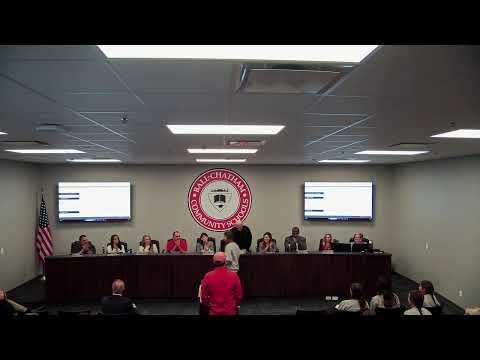
Consultant Ed Sullivan presented findings from Phase 3 of the district’s community engagement process on Nov. 15, summarizing public input and recommending next steps on a potential facilities referendum.
Sullivan described three capital options that came out of the community process: Option 1 (low-cost menu, estimated about $83 million and described as covering core safety, security and infrastructure with rolling debt and effectively zero tax increase), Option 2 (a mid-range program of about $100 million with an estimated average tax impact of about $91 per year on a $250,000 home) and Option 3 (a larger $120 million plan that would add performing arts, music and athletics and carry a higher tax impact, roughly $200 per year on a $250,000 home).
He reported nearly 1,600 participants across community committee meetings, public sessions, online feedback and scientific phone surveys. Sullivan said the community committee and the more engaged respondents tended to prefer Option 2 (the mid-range plan), while the broader public survey showed higher favorability for Option 1; overall the three options were considered viable depending on board priorities and further education of voters.
Sullivan told the board the district could feasibly move to a March referendum if the board so chose, or wait until November; he offered to prepare referendum planning materials so the board could review options at the December meeting. Board members broadly signaled support to explore the referendum timeline and community education work, though no final referendum decision was made at the meeting.