
Palm Springs Unified approves first interim budget; district projects stronger fund balance amid enrollment pressures
Get AI-powered insights, summaries, and transcripts
Subscribe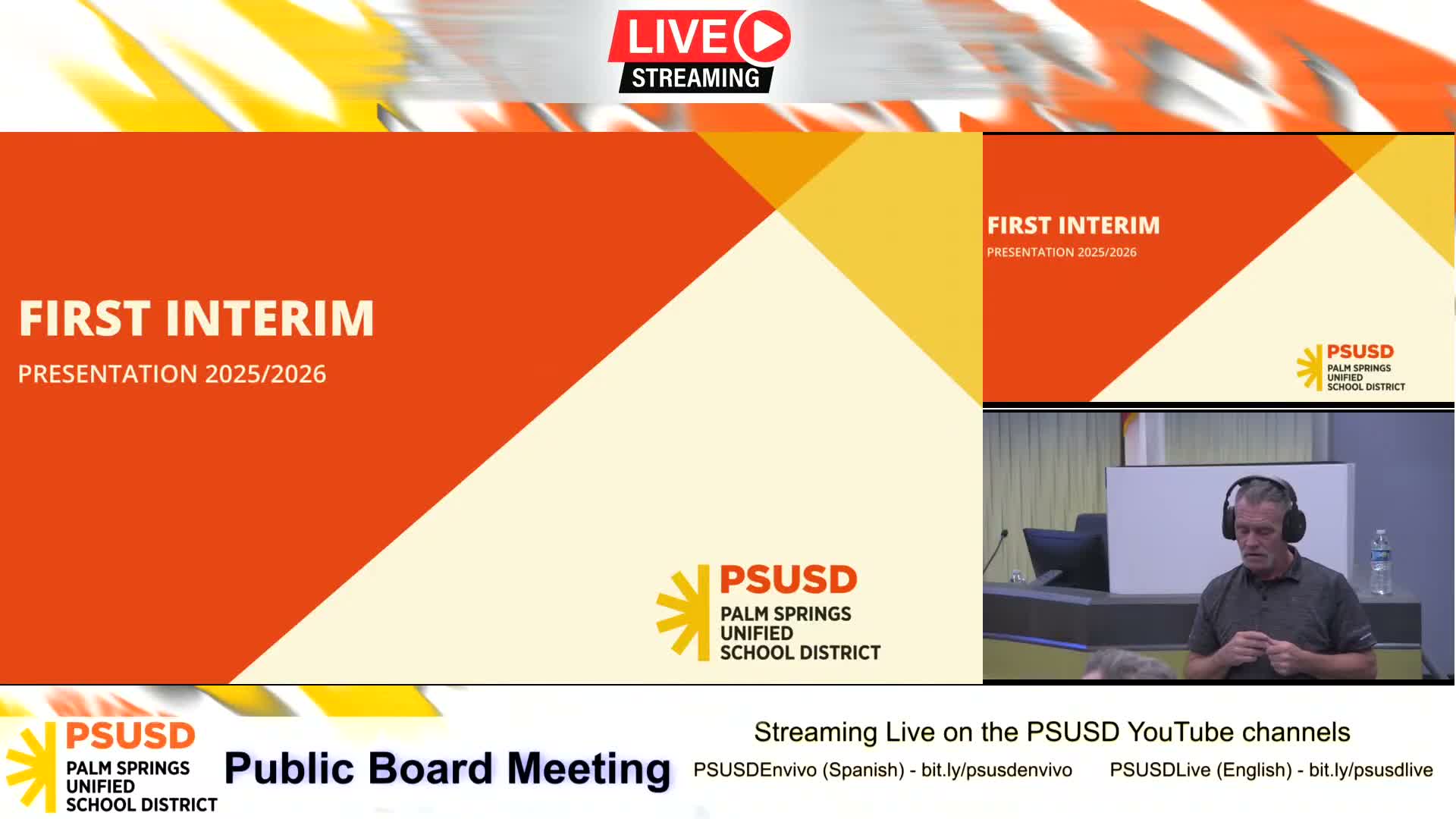
Summary
The Palm Springs Unified School District board approved its first interim budget for 2025-26, hearing staff say the district's beginning fund balance rose to about $73 million and projected ending balance to roughly $61 million while officials cautioned about enrollment declines and state revenue volatility.
The Palm Springs Unified School District board on Dec. 9 approved the district's first interim budget report, a financial checkpoint that staff said shows an improved starting fund balance but continued pressure from declining enrollment and uncertain state funding.
District staff presented the report during the board's regular meeting, outlining state and national indicators that affect district revenue. The presenter said state income tax receipts are higher than earlier projections, and one-time state funds could total roughly $7.4 billion statewide; at the same time the Legislative Analyst's Office projects a structural state deficit in later years. Staff stressed final numbers will depend on the May revision to the state budget.
Locally, the district reported a beginning general fund balance near $73,000,000 and staff projected an ending balance of about $61,000,000 for the fiscal year, a better position than previously forecast. Staff attributed the improvement to unfilled vacancies, carryover of one-time grants and tighter expenditure control. The presenter said the district is pursuing a five-year stabilization plan that assumes a $25 million reduction in expenditures over that period and will prioritize avoiding service cuts where possible.
The presenter also detailed enrollment and funding metrics: the district continues to use a three-year average for funded ADA, and staff said the unduplicated pupil percentage used to calculate supplemental concentration dollars has dropped from an estimated 72% to about 68.7% so far this year — a decline that reduces targeted funding unless offset by other qualifying categories such as English learners, foster youth or students experiencing homelessness.
Staff reviewed COLA (cost-of-living adjustment) scenarios and noted a modest downward revision in current COLA expectations compared with earlier projections. Federal revenues were described as uncertain and likely to be budgeted more conservatively moving forward. The presenter said the district will rely on a mix of strategies — spending reductions, use of one-time grant funds and indirect-cost recovery from grants — to stabilize fund balances.
Board members asked detailed questions about assumptions, indirect-cost projections and special education legal expenses. After discussion the board moved, seconded and passed the first interim report by voice vote.
The district said it will present a second interim report in January and include any May revise updates when available.