Get Full Government Meeting Transcripts, Videos, & Alerts Forever!
Get email alerts on the Housing topic
No spam. Unsubscribe anytime.
UnidosUS pitches Nogales pilot to build 1,000 affordable homes over five years
Summary
UnidosUS presented a Nogales pilot to identify barriers to homeownership and work with local partners to deliver roughly 1,000 affordable homes in 4–5 years, citing county and state shortages and the need for cross-jurisdictional solutions. Council members pressed on land and annexation questions.
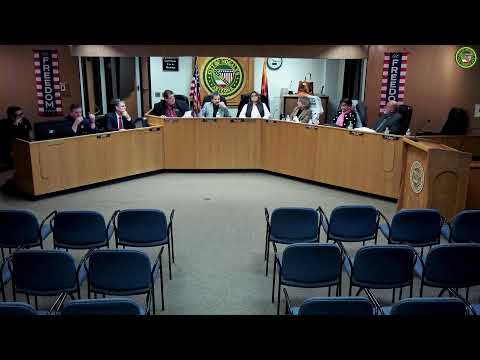
Enrique Davis, a representative of UnidosUS, told the Nogales City Council on Dec. 3 that the national Latino nonprofit is launching a pilot in Nogales aimed at increasing homeownership and removing development barriers.
"Estimates are that Nogales requires at least 1,000 new affordable homes in the next 4 to 5 years," Davis said, summarizing preliminary research UnidosUS has conducted with partners including Arizona State University and local nonprofits. He said the organization—s national campaign aims to help 4 million Latinos buy their first home by 2030 and that the pilot would test locally tailored solutions.
Davis urged a cross-sector approach. He highlighted statewide figures used in the presentation — a cited Arizona shortage of roughly 270,000 homes and a national shortfall the presenter described as about 3,800,000 — and said rents in Arizona rose between 40% and 60% from 2019 to 2023. He also said Santa Cruz County has a higher rental share than the national average, with roughly half of homes categorized as rentals.
Council members focused on practical obstacles raised in the presentation. One councilmember raised land constraints and annexation, noting Nogales is effectively landlocked within municipal borders and that annexation would require consent from residents of adjacent unincorporated areas. Davis said private landowners have expressed conditional interest in selling for affordable housing and suggested the coalition will also look to nearby Kino Springs and Rio Rico, and to county cooperation if annexation is not possible.
Davis described financing and program partners that UnidosUS can bring, including affiliate organizations and a Community Development Financial Institution (Raza Development Fund) that has provided funds in other regional projects. He said funding for UnidosUS work is a mix of federal grants, corporate contributions, foundation support and individual donors, and that grants earmarked to affiliates flow through those organizations rather than remaining at UnidosUS.
Council members asked about targeted incomes and housing types. Davis said the pilot would examine a mix of products—from one-bedroom units to three-bedroom homes—targeted to workforce households including teachers, firefighters and health workers. He recommended further coalition meetings with the city, developers and nonprofit partners to identify zoning or regulatory changes that could speed approvals and reduce developers— costs.
No formal action was taken. Davis said the coalition will continue meetings with city staff and local developers to move from diagnostic research toward concrete proposals and encouraged the council to help convene county and state partners where necessary.