
DOT proposes all‑way stop as one countermeasure for Alton’s Route 11/Grama Hill intersection; selectmen urge lower‑impact fixes
Get AI-powered insights, summaries, and transcripts
Subscribe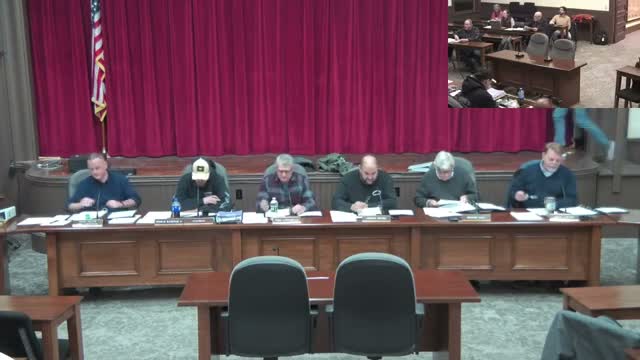
Summary
The New Hampshire DOT presented data and countermeasures for the Route 11/Grama Hill Road intersection, including an all‑way stop option that DOT said can cut serious injuries; local selectmen and residents expressed concerns about summer backups and favored adding pavement markings and a low‑level warning sign. DOT agreed to follow up with engineering options and asked for a letter of local support to pursue all‑way stop control.
Bill Lambert, New Hampshire Department of Transportation Highway Safety/Transportation Administrator, told the Alton Board of Selectmen on Dec. 9 that the intersection of Route 11 and Grama Hill Road in Alton Bay has a long history of crashes and sight‑distance problems tied to a sharp turn around the lake. DOT officials presented crash history, national examples and a set of possible countermeasures ranging from signage and pavement‑marking changes to larger capital projects such as signals or roundabouts.
"There’s a pretty good argument" for a multi‑way stop at the corner, Lambert said, citing other states’ systemic conversions and local success stories in New Hampshire where multi‑way stops reduced injury crashes. He told the board that federal guidance once treated all‑way stop as a last resort, but that recent evidence and state practices have made it more common as a low‑cost safety treatment.
Selectmen and residents pushed back on one commonly discussed option. "I think a stop sign is gonna back it up," a resident said, warning of summertime congestion near the marina and Barry’s Bait. Several board members echoed the concern that an all‑way stop could create long delays during peak weekends and special events. Others urged incremental, lower‑cost measures—extending the double yellow line around the corner, adding arrow or curve pavement markings visible to approaching drivers, and installing an eye‑level warning sign or in‑lane arrow to reinforce the bend.
Brent Foster, owner of Foster’s Tavern, told DOT staff the intersection had recently seen a rise in serious crashes, including a head‑on collision that injured a family. DOT acknowledged the outset of the concern and noted the complicating factors—tight geometry, adjacent parking and limited sign space. Lambert said some previous intersection beacons were removed after crashes and that replacing a beacon can be complicated when poles sit on private property.
DOT requested local direction: if Alton wants a multi‑way stop evaluated or included in a capital program, the town needs to show local support. Lambert said the department can implement multi‑way stops quickly where warranted, but said they will not proceed without local buy‑in. He offered to circulate the Bureau of Traffic’s operational analysis to the board and to coordinate with town staff on narrower treatments such as extending pavement markings.
The board did not vote to request immediate installation of an all‑way stop. Instead, the selectmen generally favored pursuing lower‑impact changes first—pushing the double‑yellow line around the curve and exploring additional signage—and asked DOT to provide follow‑up engineering analyses and options the town could consider at its next meeting.
The DOT presentation and local comments will be followed up by an email from Lambert to the town’s traffic bureau and a staff lead (Ryan) was asked to serve as the local contact. If the board later chooses to request an all‑way stop formally, Lambert said DOT would consider including the location in next year’s program or implement it through maintenance crews when feasible.