Get Full Government Meeting Transcripts, Videos, & Alerts Forever!
Get email alerts on the Zoning Cannabis Cultivation topic
No spam. Unsubscribe anytime.
Cheshire planning commission closes hearing on proposed cannabis cultivation text change after debate on odor rules and structures
Summary
The Planning and Zoning Commission closed a continued public hearing on a proposed zoning text amendment that would permit cannabis cultivation in a limited industrial area. Applicants proposed new odor‑control measures, a complaint trigger and special‑permit enforcement but no final decision was made tonight.
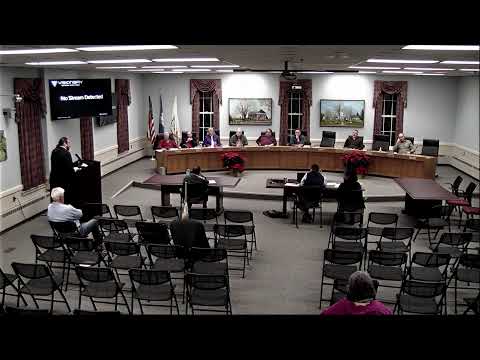
The Town of Cheshire Planning and Zoning Commission closed a continued public hearing Tuesday on a proposed zoning text amendment to allow cannabis cultivation in a narrowly defined portion of the town’s industrial zone, but the commission did not vote on the change.
Attorney Bridal Heuler, speaking for applicant Hydroclonics LLC, said the draft removes the term “greenhouse” and replaces it with “enclosed structure,” and adds enforcement language so the commission or town staff can act if odor complaints persist. “We have changed it to an enclosed structure,” Heuler said, adding that the proposed language was modeled on a Massachusetts ordinance to create enforcement “teeth.”
Why it matters: The amendment would not rezone property but would allow cultivation as a permitted use in limited industrial areas — principally frontage on East Johnson Avenue, Diana Court, Burton Avenue and McCossland Court — subject to separation distances and special‑permit review. Supporters say the change would let existing hemp growers transition to licensed cannabis cultivation under conditions the town can control; critics worried about odor, ventilation and enforceability.
Key details: The draft would require 1,000 feet between a cultivation structure and residential structures and 1,500 feet for many schools, day‑care centers and places of worship. Staff estimated roughly 10–16 properties could meet the draft criteria. Applicants highlighted state regulatory oversight and enforcement options: DEEP and state health regulations can receive nuisance complaints, and local health authorities can issue abatement orders that carry fines — cited in the hearing as up to $250 per day for continued violations.
On enforcement mechanisms, Heuler told commissioners that the original draft borrowed a Beckett, Mass., model in which repeated complaints would force a meeting with town officials and could lead to a hearing and possible revocation of a special permit. After commissioners raised concerns that “five complaints in two weeks” was too short and might be seasonally skewed, the applicant offered to change the trigger to “five complaints in three months” from separate households or businesses — a revision commissioners said was more reasonable.
Commissioners also debated whether to limit cultivation to permanent buildings rather than structures that could be defined in the zoning code as greenhouse‑type enclosures. Several members said they lacked in‑house HVAC or odor‑control expertise and would expect to invoke third‑party technical reviews, at the applicant’s expense, when a special‑permit application arrived. Heuler confirmed the town’s existing fee and third‑party review process could be used to evaluate ventilation designs, scrubbers and other odor‑mitigation systems.
Applicants and supporters emphasized economic benefits. Brandt Smith, the property owner who would likely be affected if the text change is approved, said renovations tied to an enclosed cultivation facility could employ local contractors and estimated a multi‑million dollar investment for upgrades, including geothermal work. “We’re using local businesses to probably do a $4.04 or $5,000,000 project,” Smith said in the hearing.
Opponents and some commissioners pressed technical points: whether olfactometers and applicant‑supplied readings could be relied on, how seasonal weather affects odor detection, and whether the town should measure setbacks from property lines rather than building footprints. Heuler said objective measurement details were best left to special‑permit conditions the commission could impose on any future application.
What didn’t happen: The commission closed the public hearing without voting on the amendment. No formal decision to adopt or reject the text change was recorded. The only formal motion and recorded vote in the transcript was to adjourn the meeting; the motion passed with an “Aye” vote.
Next steps: With the hearing closed, the commission may deliberate at a future meeting and could revise the language (for example, by changing complaint thresholds, setback definitions or whether permanent buildings are required). Any applicant seeking to operate would still need to apply for and secure a special permit and demonstrate compliance with any technical and odor‑control conditions that the commission imposes.