
West Bend committee begins review of district—s 300-series instruction policies
Get AI-powered insights, summaries, and transcripts
Subscribe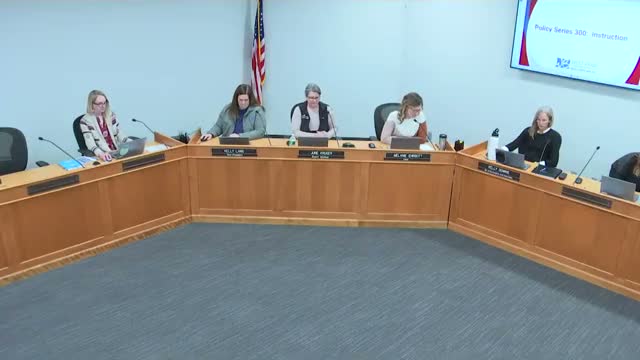
Summary
A curriculum committee meeting on Dec. 2 launched a district-wide review of the West Bend School District—s 300-series instruction policies. A policy-committee liaison urged a focused review of a few required policies, engagement from students and staff, and clearer distinctions between policy and administrative guidance.
Melanie Ergot, a West Bend School District school board member, convened the curriculum committee Dec. 2 to begin a scheduled review of the district—s 300-series policies, which cover instruction.
An unidentified policy-committee liaison told the committee the review will focus on key policy "buckets" rather than editing all 75 policies line by line. "Less is more with policy," the liaison said, arguing that some mission and vision language is better housed in strategic planning than formal policy and that roughly 10 policies in the series are required by statute.
The liaison outlined a multi-stakeholder approach: two high-school student leadership teams and staff engagement groups will review selected policies and send feedback to the committee before policies return for board readings. The liaison recommended that the committee use policy to anchor the district to state academic standards while keeping detailed process and procedural material in administrative rules or exhibits that can be updated more often.
Committee members raised several areas the liaison said warrant particular attention: an explicit statement of the district—s instructional goals (rather than a standalone mission statement tucked in policy); clearer cross-references to special-education and 400-series policies; explicit language defining "pilot" programs and research protections; and updated language around materials selection and reconsideration. The liaison cautioned against wording such as "experimental programs," saying it "sounds like we're using children as guinea pigs," and recommended documenting who authorizes pilots and what consent is required.
More technical policy issues flagged for review included: graduation requirements and class-rank calculations, which can affect valedictorian determinations and weighted-grade practices; clarifying enrollment rules (part-time, homeschool access, and course pathways); and updating instructional-technology policy to address artificial-intelligence tools.
The liaison offered to provide templates for committee feedback (spreadsheets or markups) and suggested the committee prioritize two "meaty" sections—basic instructional program and instructional resources—before engaging student reviewers.
The committee will take submissions from members and staff and expect to see revised language again before formal board readings. The meeting adjourned at 5:38 p.m.
What happens next: committee members will receive a template to submit edits, staff will synthesize feedback, and student teams will be asked to review draft language before it proceeds to board readings.