Get Full Government Meeting Transcripts, Videos, & Alerts Forever!
Get email alerts on the County Budget topic
No spam. Unsubscribe anytime.
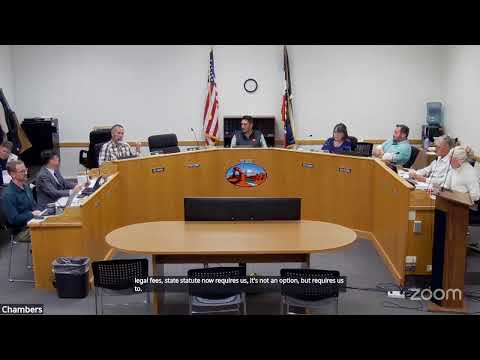
Grand County weighs 0.3% sales tax and staffing cuts to close $1.5M budget gap
Summary
At a Dec. 2 budget workshop Grand County commissioners reviewed options to reduce a roughly $1.5 million reserve draw, including a proposed 0.3% fixed-guideway sales tax expected to generate about $2 million annually, phased increases to administrative fees, and a hiring freeze plus voluntary work reductions to save recurring salaries.
Grand County commissioners and staff met Dec. 2 to review options for closing an estimated $1.5 million shortfall in the county's tentative 2026 budget. Staff framed the response as two concurrent strategies: increase revenues and decrease expenses.
Staff presented a proposal for a 0.3% 'fixed guideway' sales tax that it estimated could bring in about $2,000,000 a year. Staff said some of that revenue could be devoted to operations and maintenance but recommended limiting such allocations so future bond capacity — for example to build a public safety facility — would remain viable. A staff member described outside consultant Marcus Keller's advice as not to allocate more than 50% of the revenue to O&M; one commissioner suggested a 20% cap would be more prudent.
On the expense side, staff reviewed administrative fees currently applied to departments and showed a calculation that produced roughly $9 per employee-hour under one method. Commissioners discussed phasing in increases or capping the fee to avoid sudden impacts on department budgets. Staff said a $4-per-hour administrative fee for employees in departments not supported by property taxes could reduce the general fund by about $312,000, after accounting for currently budgeted administrative service amounts.
Personnel-related measures drew extended attention. Staff recommended continuing an indefinite hiring freeze for all departments and requiring commission approval before filling any vacancy that arises in 2026. Holding existing vacancies was estimated to save between $104,000 and $139,000 per month, depending on timing and which positions remained unfilled. As a less disruptive option, staff proposed a voluntary reduced-hours pilot that could save an estimated $16,500–$30,000 a month. A mandatory temporary work-reduction scenario was modeled as saving roughly $192,000 a quarter but staff did not endorse mandatory cuts.
Commissioners also reviewed non-general-fund allocations tied to tourism receipts (TRT/TRCCA) and noted a $200,000 revolving loan program remains in legal review and may or may not be available to offset budgeted items. Staff urged commissioners to decide promptly whether to omit some planned salaries from the adopted budget (showing the full shortfall) or to keep them in and rely on operational choices later.
Next steps: staff will provide more detailed backup on administrative fee methodology (as requested by the state auditor's office), and commissioners scheduled follow-up workshops on Dec. 8 and 9 to refine decisions. The commission did not take a final vote on any tax increase or permanent personnel reductions at the meeting.